

Du Plessis Grinds Down Usman in Oklahoma City
You could feel it in the building before the first glove touched the canvas. Paycom Center in Oklahoma City hadn’t hosted the UFC since 2017, and on a sticky July night in 2026 the place was packed tight with 17,173 fans who came to see two former champions try to rewrite the next chapter of their careers. Dricus du Plessis, the former middleweight titleholder still carrying the sting of that one-sided loss to Khamzat Chimaev nearly a year earlier, against Kamaru Usman, the Nigerian Nightmare who once ruled the welterweight division like it was his personal kingdom and was now taking another shot at 185 pounds. What we got was not a highlight-reel finish or a dramatic comeback. It was something more honest and more telling: a five-round masterclass in awkward power, relentless pressure, and the simple fact that size, timing, and a refreshed toolkit still matter when the lights are brightest.
The Preview That Almost Wrote Itself
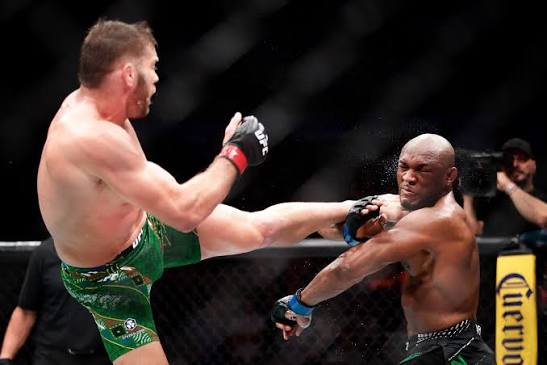
Going into the fight, the narrative was clean and compelling. Du Plessis had spent the better part of a year away after dropping the belt. The Chimaev loss exposed holes in his wrestling defense that critics had been whispering about for months. “Stillknocks” needed a statement win, something that showed he had closed those gaps and still belonged near the top of a stacked middleweight division. Usman, 39 years old and coming off a solid decision over Joaquin Buckley at welterweight in 2025, was looking to prove that the old magic hadn’t completely left him. He had already tried middleweight once, on short notice against Chimaev, and nearly pulled off the upset. This time he had a full camp. The idea of the former pound-for-pound king using his wrestling and pressure to smother the bigger South African was the most popular storyline in the build-up.
Oddsmakers made du Plessis a clear favorite, somewhere around -230, and the smart money seemed to agree. Usman was the smaller man by a noticeable margin even after the move up. Du Plessis walked around heavier, hit harder, and possessed that strange, rangy, almost herky-jerky striking style that has frustrated cleaner technicians for years. The question wasn’t whether Usman could hang; it was whether he could impose his will for five full rounds against a guy who thrives in chaos. Both men talked respect in the lead-up. Both men also made it clear they expected to leave Oklahoma City with their hands raised. The fight was booked as a five-round main event on Paramount+, and for once the hype felt earned rather than manufactured.
How the Fight Actually Unfolded
From the opening seconds it was clear du Plessis had come to dictate. He claimed the center of the Octagon immediately, kicked the lead leg, and started mixing in those looping lefts and sudden high kicks that make his style so hard to time. Usman looked measured at first, trying to find range with the jab and looking for entries into the clinch. Early on there was a brief clinch against the fence that ended with an accidental low blow, and when the action restarted du Plessis answered with another high kick. The first round belonged to the South African on volume and impact. Official stats later showed him out-landing Usman 29-17 in significant strikes in that opening frame, and the pattern was already set.
Round two was where the fight tilted hard. Usman came out swinging an overhand right that found nothing but air. Du Plessis slipped, reset, and began to pour it on. A knee to the jaw early in the round put Usman on unsteady legs. Another knee later, this one to the body, followed by a clean right hand that opened a cut near the eye. Du Plessis smelled blood and kept the pressure high without overcommitting into a wild finish attempt. Usman showed the toughness that defined his entire career, surviving the worst of it and still trying to move forward, but the power gap was obvious. By the end of the round the former welterweight champion was marked up and breathing heavily. Most scorecards had it 10-9 for du Plessis, and more than a few observers thought it could have been a 10-8.
The third round slowed just a touch. Both men had spent energy in the first ten minutes, and the exchanges became more calculated. Du Plessis still landed the cleaner, harder shots. Usman finally managed a brief takedown late in the round, but it lasted barely a second before du Plessis scrambled back to his feet. The wrestling that so many expected to be Usman’s path to victory simply never materialized in any sustained way. Official numbers showed Usman going 0-for-7 on takedown attempts across the entire fight. Du Plessis stuffed every single one, often with that perfect level change and underhooks that suggested the year away had been spent fixing exactly the problems Chimaev had exposed.
Round four brought more of the same pressure from the South African. A question-mark kick stunned Usman. Elbows in the clinch added to the damage. Usman kept trying to force the issue, swinging hard and looking for anything that might change the momentum, but the volume and accuracy stayed with du Plessis. By this point the cut near Usman’s eye was more pronounced, and the power shots were starting to accumulate. Still, “The Nigerian Nightmare” refused to wilt. He kept coming forward, kept throwing, kept looking for that one moment that might flip the script.
The fifth and final round was the closest thing Usman got to a moral victory. Sensing the need for something dramatic, he marched forward and started throwing combinations with real intent. A right hand connected cleanly. For a brief stretch he had du Plessis backing up and covering against the cage. The crowd came alive, sensing the possibility of a late surge. Du Plessis weathered it, returned fire, and the two men traded until the final bell. Some observers scored the round for Usman; others still gave the edge to the former champion on cleaner work and control of the space. Either way, it was never going to be enough.
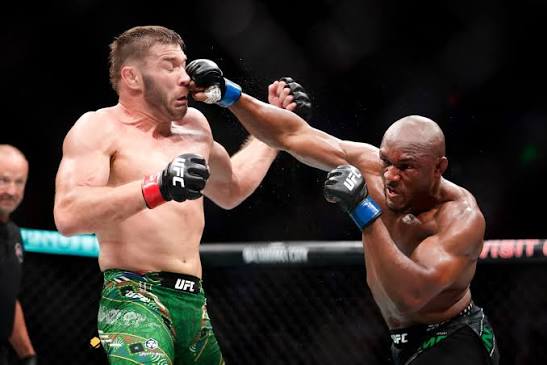
When the scores were read—50-45, 49-46, 49-46—the result felt inevitable. Du Plessis improved to 24-3. Usman fell to 21-5 and 1-4 in his last five fights. The Fight of the Night bonus went to both men, a recognition that even in a one-sided decision the action had been genuine and the toughness on display was real.
Analysis: What the Numbers and the Eye Test Told Us
The strike totals tell the clearest story. Du Plessis landed 136 significant strikes to Usman’s 92. He was more accurate (49 percent to 39 percent) and did the bulk of his damage at distance. Head strikes were especially lopsided: 102 to 49. Usman found some success to the body, but it never slowed the South African enough to change the complexion of the fight. Control time was almost nonexistent for either man. This was a pure striking battle, and the bigger, fresher, more accurate striker won it comfortably.
What stood out most was how completely du Plessis neutralized the wrestling. Usman is one of the greatest wrestlers the welterweight division has ever seen. On this night the entries were telegraphed, the level changes were met with underhooks or sprawls, and the few times he got close the scramble went against him. Whether that was the result of the size difference, the torn pec that Usman later revealed he had fought through, the residual effects of an early thumb to the eye that he said blurred his vision, or simply a younger, better-prepared version of du Plessis, the result was the same. The path many expected Usman to take simply was not available.
Du Plessis looked like a refined version of himself. The unorthodox rhythm was still there, the sudden power shots still landed with that heavy thud, but the defensive wrestling and the ability to maintain output across five rounds looked improved. He never chased the finish after hurting Usman in the second, which some will criticize, but the controlled aggression kept him out of danger and racked up rounds. Post-fight he was clear about his intentions: “I’m back in the winner’s circle, baby. Let’s get my belt back.” Whether that means another crack at the current champion or a high-level contender remains to be seen, but the performance put him firmly back in the conversation.
For Usman the night raised harder questions. At 39, with a recent record that no longer matches the peak years, the conversation about how much longer he wants to do this is inevitable. He fought through injury, took the shots, and never stopped trying. That toughness is why fans still respect him. But the speed and reaction time that once made him nearly untouchable looked a step slower. The wrestling that defined him never got going. In the post-fight interview he refused to make excuses, even while acknowledging the eye issue and later revealing the torn pec. That kind of accountability is rare and admirable. Whether it leads to another run at 170, another try at 185, or a decision to walk away is something only he and his team can answer.
Top Highlights
The knee in the second round that turned Usman’s legs to rubber will be the clip that lives longest. Du Plessis timed the entry perfectly, drove the knee upward as Usman dipped, and for a moment it looked like the fight might end right there. Usman somehow stayed upright, but the damage was done and the momentum never fully returned.
The cut that opened near Usman’s eye mid-fight became a visual marker of the accumulating pressure. Every time the camera cut to his face the swelling and the blood told the story better than any scorecard.
Usman’s late flurry in the fifth, when he finally forced du Plessis to the cage and threw with abandon, was pure heart. It wasn’t enough to win the round on every card, but it was the kind of moment that reminds you why this sport still matters. Two proud veterans trading until the horn, neither willing to give an inch.
The complete shutdown of the wrestling game deserves its own mention. Seven takedown attempts, zero success. For a fighter built on that skill set, it was a quiet but decisive part of the night.
And finally, the post-fight moment when du Plessis grabbed the mic, praised Usman as a warrior, took a shot at the “lay-and-pray” style he felt cost him the title, and declared he wanted his belt back. It was classic Stillknocks—raw, confident, and completely unfiltered.
Summary
On a warm July night in Oklahoma City, Dricus du Plessis reminded the middleweight division that he is still a force. He outstruck, outworked, and out-adjusted a legitimate all-time great over five rounds, earning a clear unanimous decision and the Fight of the Night bonus in the process. The performance was not perfect—he never finished a hurt opponent—but it was complete. The wrestling holes that cost him the title appeared patched. The power and awkwardness that made him champion were fully intact. He left the Octagon with his hand raised and a clear demand for another title shot.
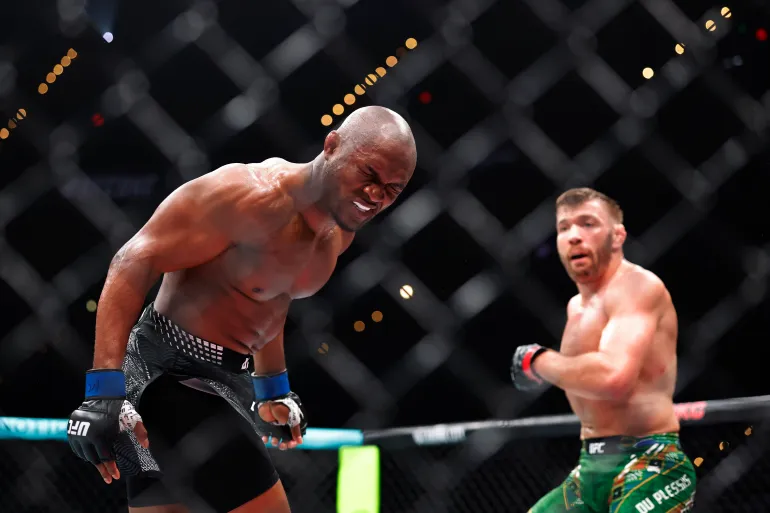
Kamaru Usman left with his pride intact and more questions than answers. He absorbed a beating that would have folded most fighters, showed flashes of the old fire in the final round, and refused to hide behind injuries or excuses. At this stage of his career that resilience is both impressive and bittersweet. The Nigerian Nightmare is still dangerous. Whether he is still championship-level is a question the next few months will answer.
For the fans who filled Paycom Center and the ones watching at home, the night delivered exactly what a main event between two former champions should: honest violence, visible toughness, and a result that felt earned rather than stolen. Du Plessis is back in the winner’s circle. The middleweight picture just got a little clearer, and a little more interesting. The only question left is who steps up next—and whether Stillknocks 2.0 is ready to climb all the way back to the top.