

STEINSGATE RE:BOOT Review: Time Travel, Nostalgia, and a New Worldline Worth Diving Into
There’s something almost fitting about sitting down with STEINS;GATE RE:BOOT in 2026. The original game dropped on Xbox 360 back in 2009, a dense, slow-burn visual novel that mixed hard sci-fi, otaku culture, conspiracy theories, and some of the most emotionally brutal storytelling the genre has ever produced. It became a phenomenon—anime adaptation, sequels, spin-offs, and a legion of fans who still quote “El Psy Kongroo” like a secret handshake. Now, seventeen years later, MAGES and Spike Chunsoft have given it a full reboot. Not a simple remaster. A proper re:boot. New art, re-recorded voices, a rebuilt soundtrack, smoother pacing, and—most importantly—an entirely new route that takes the story somewhere the original never went.
I played the Steam version that launched on August 20, 2026 (some regions saw it a day earlier). Consoles are still a couple of months out. After sinking the better part of a week into it—roughly 40 hours across a full clear with the new content—I’m left feeling the same way I did the first time I finished the original: drained, a little heartbroken, and weirdly hopeful. This is still one of the best time-travel stories in gaming. The question is whether the reboot actually improves on what’s already there, or if it’s just a prettier coat of paint on a classic that didn’t need much fixing.
The Story You (Probably) Already Know, Polished Up
If you’ve never touched STEINS;GATE, here’s the short version without spoiling the gut punches. You play as Rintaro Okabe, a self-proclaimed mad scientist who runs the Future Gadget Laboratory out of a rundown apartment above a CRT shop in Akihabara. His “lab members” are a mismatched bunch: childhood friend Mayuri, the quiet genius Kurisu Makise, the otaku hacker Daru, and a rotating cast of quirky supporting characters who feel more like real people than archetypes. One day their improvised “PhoneWave” microwave accidentally starts sending text messages into the past—D-Mails—and everything spirals. Small changes cascade into worldline shifts. Okabe finds himself jumping between realities, trying to save the people he cares about while the universe pushes back.
The core narrative in RE:BOOT is based on the streamlined script from STEINS;GATE ELITE (the 2018 anime-cutscene version), but it’s been further refined for better pacing and readability. Some of the original’s denser, more meandering sections have been tightened. New dialogue and narrative text expand certain moments. The phone-trigger system is back in full force—replying to texts and answering calls is how you steer the story toward different endings. Miss a key exchange or take too long and you can lock yourself out of the true path. It’s still fiddly in places, but the improved UI and a helpful “skip to next phone trigger” option make it less of a headache than it used to be.
What hasn’t changed is the emotional weight. The first half is pure hangout vibes mixed with escalating weirdness. The second half is a relentless series of sacrifices, failures, and the slow realization that changing the past always costs something. Okabe’s growth from chuunibyou LARPer to someone carrying the weight of multiple broken timelines remains devastating. The writing still balances scientific jargon, conspiracy rabbit holes, and deeply human moments with rare skill. The Tips glossary is still there for the science nerds and the 2chan references. Akihabara itself feels alive again—maid cafés, electronics shops, the summer heat, the sense that this neighborhood is both playground and prison.
The Big New Thing: Gamma Worldline
The main reason veterans will boot this up is the brand-new Gamma Worldline route. After the usual ordeals, Okabe lands in a reality where the time machine was never completed and D-Mails don’t exist. The Hououin Kyouma persona never formed. The lab members look at him with hostility instead of familiarity. He ends up tangled with Moeka Kiryu in a much darker, lonelier story about isolation, compromise, and a different kind of brutality.
It’s not just a side path for completionists. The route leans hard into themes the original only brushed against. Without the mad-scientist mask and the Founding of the Lab as a shared delusion, Okabe is a different person—more desperate, more willing to get his hands dirty. The relationships twist in uncomfortable ways. Japanese reviewers in particular have been talking about how this new ending makes the true ending of the main path hit even harder, because you’ve now seen what happens when certain possibilities are abandoned. It’s bleak, well-written, and feels like it belongs in the same universe rather than a forced DLC-style add-on. For fans who thought they’d seen every worldline, this is the real draw.
Presentation: Gorgeous Backgrounds, Polarizing Characters
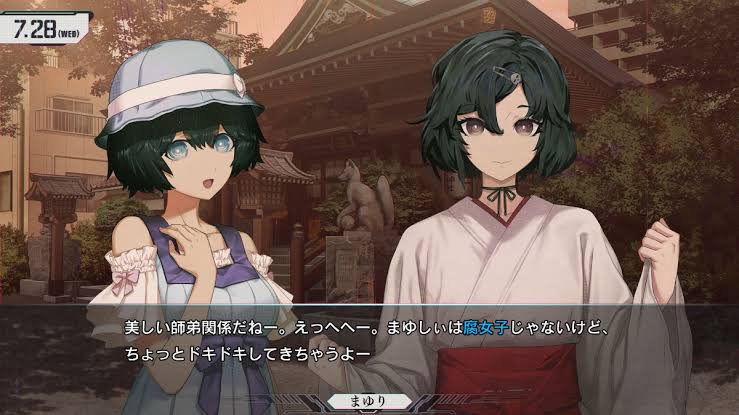
Visually, RE:BOOT is a mixed bag that will spark arguments. Everything has been redrawn from scratch. Backgrounds are denser and more detailed—Akihabara looks lived-in and specific, with twice as many event CGs as the original Xbox 360 version and about 20% more background art. Character designer huke returned and updated outfits and accessories for a slightly more contemporary feel while keeping the iconic silhouettes. The new still images are excellent.
The characters themselves use E-mote technology (the same system that worked well in Anonymous;Code). They breathe, shift expressions smoothly, and have subtle movements during dialogue. On paper it sounds perfect. In practice, opinions split hard. Some players love how alive the cast feels. Others—myself included at first—found the animations a bit uncanny and repetitive, like high-end VTuber models cycling through the same few gestures. The color palette is brighter and cleaner than the original’s messy, melancholic painted look. It loses some of that rainy-day grit that matched the story’s tone so well. You get used to it after a few hours, and the special event illustrations with actual mouth movement help, but I still prefer the classic 2D sprites for pure atmosphere. The backgrounds carry a lot of the visual load and do it beautifully.
Audio is a clear win. Every voice line was re-recorded by the original Japanese cast. Mamoru Miyano as Okabe still nails the shift from over-the-top theatrics to quiet despair. The supporting cast sounds sharp and invested. Composer Takeshi Abo completely remade the soundtrack. Familiar motifs return in new arrangements, and the new tracks fit the tone without feeling like generic upgrades. The opening still hits hard with Kanako Ito’s “Skyclad Observer.” Japanese audio with English text is the way to go; the translation is solid and natural.
Who Is This Actually For?

This is the awkward part. STEINS;GATE RE:BOOT costs $59.99 for the standard edition. The original and ELITE are often much cheaper, especially on sale. If you’ve never played any version, this is an excellent entry point—smoother pacing, modern presentation, and the new route gives you something unique. Steam Deck compatibility is listed as Playable, and the refined UI helps. Newcomers who only know the anime will get the deeper branching experience the show couldn’t fully capture.
If you’re a longtime fan who already owns the original or ELITE, the value proposition is thinner. The core story is refined rather than rewritten. The Gamma route is substantial and worth experiencing, but it’s not a full second game. Some players will feel the price is steep for “the same story with better lighting and one new path.” Others will argue that the combined package of new art, full voice re-recording, remade music, quality-of-life improvements, and the exclusive route makes this the definitive edition. Critic scores have landed in the generally favorable range (Metacritic around 83), with most praise going to the writing and the new content, and the usual caveats about price and presentation preferences.
I fall closer to the “worth it for fans who can afford it” camp. The new route alone justified the replay for me. Seeing Okabe without the Hououin Kyouma armor, forced to confront a colder version of the people he loves, added a layer that made the true ending feel earned in a fresh way. The technical issues are minor—occasional text box quirks, the phone timing still feeling arbitrary in spots—but nothing that breaks the experience.
Final Thoughts
STEINS;GATE was never really about the gadgets or the science lectures. It was about the unbearable weight of trying to fix things for the people you care about, and the quiet realization that some losses can’t be undone without creating new ones. RE:BOOT understands that. It doesn’t reinvent the wheel. It polishes it, adds a new spoke that cuts deeper than expected, and presents the whole thing in a package that looks and sounds like 2026 while still feeling like the Akihabara of 2010.
Is it the absolute best way to experience the story? For pure atmosphere and the original’s denser text, some will always prefer the 2009 version. For animated spectacle, ELITE still has its defenders. But as a complete, modern package that respects the original while giving veterans a genuine reason to return, RE:BOOT succeeds more often than it stumbles. The Gamma Worldline is the real surprise—an unexpected, bleak little gem that makes the whole journey feel newly observed.
If you’ve been waiting for the right moment to finally play STEINS;GATE, or if you’re a lab member who thought you’d seen every divergence, this is a solid place to start (or restart). Just don’t expect the reboot to magically erase the heartbreak. Some things are conserved across worldlines. The tears are one of them.
