India’s Dominant Display: Crushing Zimbabwe by 72 Runs in Super Eights Thriller at the 2026 ICC Men’s T20 World Cup
The MA Chidambaram Stadium in Chennai, fondly known as Chepauk, witnessed a batting masterclass on February 26, 2026, as defending champions India demolished Zimbabwe by 72 runs in the 48th match of the ICC Men’s T20 World Cup 2026. This Super Eights Group 1 encounter saw India post a mammoth 256/4—the highest team total of the tournament and the second-highest in T20 World Cup history—before restricting Zimbabwe to 184/6. The comprehensive victory not only revived India’s semi-final aspirations after a heavy defeat to South Africa but also mathematically eliminated Zimbabwe from contention, securing South Africa’s progression to the knockouts.
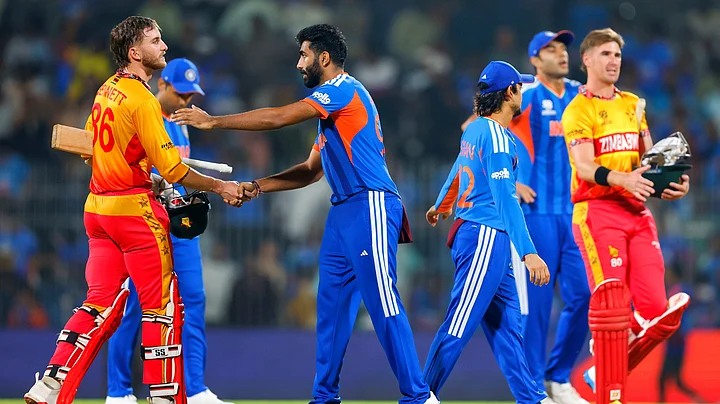
The 2026 T20 World Cup, co-hosted by India and Sri Lanka, featured an expanded 20-team format with four groups of five in the initial stage, advancing the top two from each to the Super Eights. Group 1 comprised powerhouses India (seeded X1), South Africa (X2), West Indies (X3), and surprise qualifiers Zimbabwe (X4), who had topped their group unbeaten. India entered the match under pressure following a 76-run loss to South Africa in Ahmedabad, which dented their net run rate (NRR) and left them needing big wins to stay alive. Zimbabwe, buoyed by upsets including a win over Sri Lanka earlier, aimed to upset the hosts on home soil and keep their dream run going.
Chepauk’s pitch, typically spin-friendly with some assistance for pacers under lights, promised a high-scoring affair due to short boundaries and dew. India won the toss and elected to bat first, captain Suryakumar Yadav citing confidence in his explosive lineup. Zimbabwe, led by Craig Ervine (with Sikandar Raza rested), made minimal changes, relying on their balanced attack featuring Tendai Chatara, Blessing Muzarabani, and emerging spinner Wellington Masakadza.
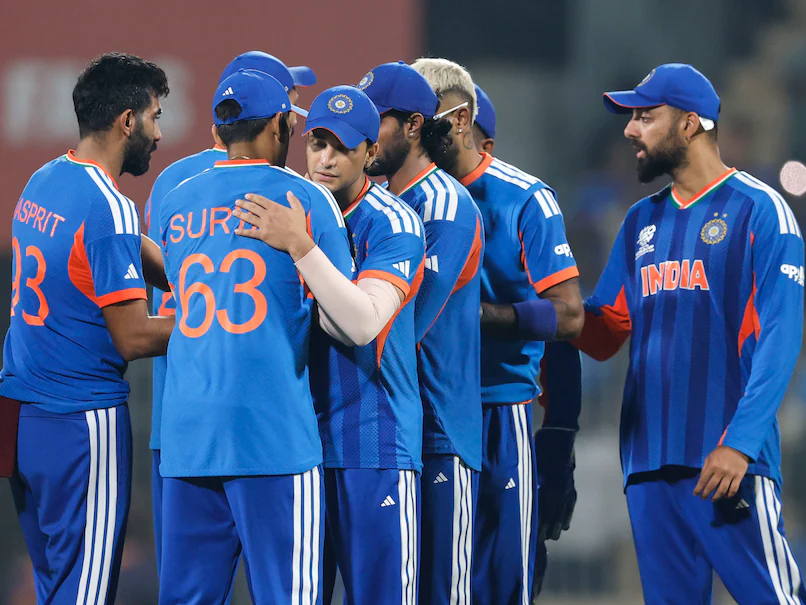
India’s innings exploded from the outset. Openers Abhishek Sharma and Rohit Sharma set a blistering platform. Abhishek, under scrutiny for inconsistent form, silenced critics with a ferocious 55 off 30 balls, smashing seven fours and three sixes. He targeted Muzarabani early, pulling a short ball for six over midwicket in the second over. Rohit, in vintage form, contributed 42 off 24 before holing out to long-on off Masakadza. The powerplay yielded 78/1, India’s highest in the tournament.
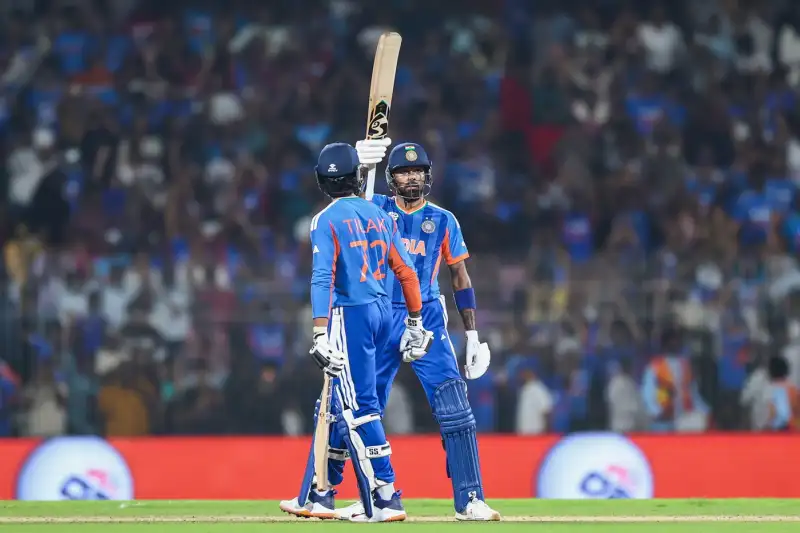
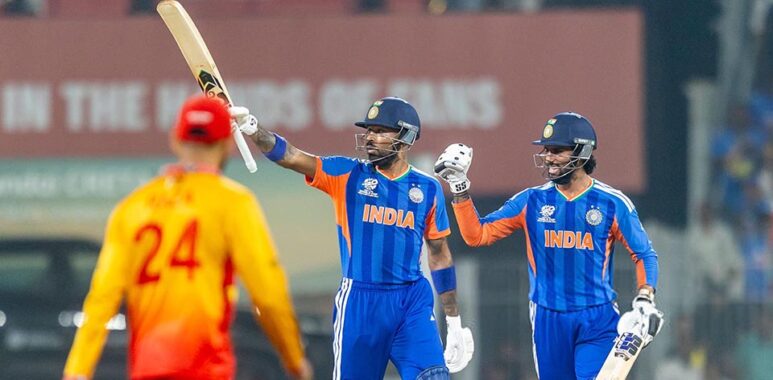
At the crease next, Virat Kohli anchored briefly (28 off 21) before accelerating, but it was the middle-order fireworks that propelled India past 200. Hardik Pandya, batting at No. 5, unleashed carnage: an unbeaten 50 off just 23 balls, featuring four fours and four towering sixes. His assault included a 108-meter maximum off Chatara that cleared the stands. Rishabh Pant (35* off 18) and Shivam Dube (22 off 12) provided late impetus, with Dube’s pulled six off Ryan Burl capping the onslaught. Zimbabwe’s bowlers wilted under the barrage—Muzarabani conceded 48 in four overs, Chatara 52. India finished at 256/4, surpassing their previous best of 244 in the 2024 edition.
Post-innings, Hardik Pandya, named Player of the Match, said: “We were hurting after the South Africa loss. The boys wanted to make a statement. Chepauk came alive, and batting first helped. 256 is massive—now we back our bowlers.” Suryakumar added: “This was about intent. Abhishek and Hardik set the tone. We need to win big against West Indies next.”

Chasing 257, Zimbabwe needed a miracle. Openers Tadiwanashe Marumani and Brian Bennett started positively, but India’s pace attack struck early. Arshdeep Singh dismissed Marumani (12) with a yorker in the third over. Bennett, however, counterattacked brilliantly, reaching his fifty off 32 balls with aggressive strokeplay—pulls, drives, and innovative scoops. He found support from Dion Myers (28 off 19), adding 68 for the second wicket.
India’s spinners turned the tide. Axar Patel (2/28) and Varun Chakravarthy (1/32) choked the middle overs, with Chakravarthy foxing Myers with a googly. Bennett soldiered on, reaching 97* off 59 (nine fours, five sixes)—a heroic knock that kept Zimbabwe in the hunt momentarily. But wickets tumbled: Raza (15) fell to Hardik’s slower ball, caught at deep midwicket. Lower-order resistance from Ryan Burl (18) and Brad Evans (1*) was futile.
Arshdeep finished with 3/24 in four overs, his death bowling exceptional—yorkers and slower ones proving lethal. Jasprit Bumrah (1/18) bowled a miserly spell, while Hardik’s medium pace added control (0/21 in three). Zimbabwe ended at 184/6, 72 short. Bennett’s effort was commendable, but the target proved too steep against India’s disciplined attack.
The result had massive implications: India boosted their NRR significantly, setting up a virtual quarter-final against West Indies in Kolkata on March 1. A win there would likely secure their semi-final spot (facing England in Mumbai). South Africa, already qualified with four points, topped Group 1. Zimbabwe exited with pride intact but no points from Super Eights, their fairytale run ending.
Key performances defined the match: Abhishek’s aggressive fifty revived his form, Hardik’s all-round display (50* & economical bowling) earned him POTM, and Bennett’s 97* was a career highlight despite the loss. Statistically, India’s 256/4 featured 17 sixes—the most by any team in a T20 World Cup innings this edition. Arshdeep’s 3/24 was his best in the tournament.
Post-match reactions poured in. Zimbabwe coach Dave Houghton praised Bennett: “Brian showed world-class temperament. We’re proud, but India were clinical.” Suryakumar reflected: “This win keeps us alive. The crowd was electric—playing at home is special.” Fans at Chepauk erupted as India crossed 250, chanting “India! India!” throughout.
This match highlighted T20 cricket’s evolution: aggressive batting, fearless strokeplay, and bowlers adapting to high totals. India’s revival echoed their 2024 triumph—resilience under pressure. As the tournament progressed to semis (South Africa vs New Zealand in Kolkata, India vs England in Mumbai), this Chennai demolition stood as a reminder of the Men in Blue’s firepower when firing on all cylinders.
Zimbabwe’s campaign, though ending here, inspired—upsets over stronger sides proved associate nations belong. For India, the road to defending their title remained open, fueled by this commanding performance.