
Outbound Review — The Open Road Has Rarely Felt This Cozy
There’s a very specific fantasy at the heart of Outbound. It’s the dream of leaving everything behind, climbing into a weathered camper van, and driving toward nowhere in particular. No deadlines. No gunfire. No collapsing kingdoms to save. Just forests, mountains, quiet roads, and the soft hum of renewable energy powering your tiny home on wheels.
For years, games have tried to capture the appeal of “cozy living,” but most of them stay rooted in one place. Farming sims give you a homestead. Survival games make you build a base. Exploration games send you wandering. Outbound attempts to merge all three ideas into one experience by turning your home into the vehicle itself.
Released on May 11, 2026, by Square Glade Games, Outbound arrived with enormous anticipation. The game had already built massive momentum before launch thanks to its trailers, social media clips, and a simple but irresistible concept: a peaceful co-op road trip game where you build a self-sustaining camper van and explore a colorful open world with friends.
And honestly? For the first few hours, it absolutely delivers on that fantasy.
Outbound is charming in a way few games manage to be. It’s warm, inviting, and genuinely relaxing. The atmosphere is immaculate. Watching sunlight pour through pine trees while your van’s battery charges through solar panels creates an oddly therapeutic rhythm. Decorating your mobile home with tiny details while a dog naps nearby is the kind of cozy energy the game industry has been chasing for years.
But after spending significant time on the road, the cracks start to show.
Outbound is a beautiful idea that sometimes struggles to become a compelling long-term game.
That doesn’t make it bad. Far from it. In many ways, it’s one of the most interesting indie releases of 2026 so far. But it’s also a game caught between two identities: a relaxing sandbox and a progression-driven survival experience. Sometimes those two sides work together beautifully. Other times they actively fight each other.
A Camper Van as Your Entire World
The core hook of Outbound is incredibly simple.
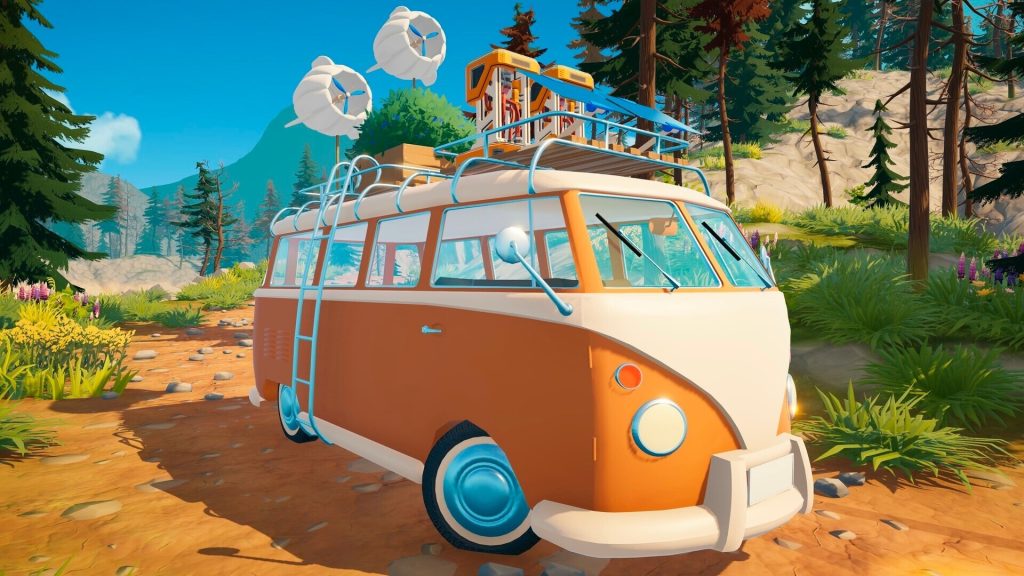
You begin with a barebones electric camper van in a peaceful open world. From there, you gather materials, unlock blueprints, install upgrades, craft workstations, and slowly transform the van into a fully functional mobile home.
You can add solar panels, wind turbines, batteries, crop beds, cooking stations, storage systems, and decorative furniture. Every addition makes your little vehicle feel more alive.
Unlike traditional survival games that focus on building massive permanent bases, Outbound keeps everything centered around movement. Your home is always with you. The road itself becomes the progression system.
That single design choice changes the tone of the entire experience.
There’s something deeply satisfying about parking your van beside a river at sunset, deploying your equipment, cooking food, and planning the next leg of your trip. The game constantly creates postcard-worthy moments without trying too hard.
The visual design helps enormously here. Outbound’s world is colorful without becoming cartoonish. It leans into soft lighting, cozy interiors, and scenic environments that feel intentionally designed for slow exploration. The art direction often resembles a playable indie illustration.
It’s a world designed to make you exhale.
And importantly, the game understands restraint. There are no zombies. No invading factions. No giant monsters tearing down your carefully built systems. Outbound wants tension to come from logistics rather than danger.
That approach will instantly divide players.
If you’re looking for high-stakes survival mechanics, you may find the game too passive. But if you’ve ever wished survival crafting games would stop interrupting relaxation with constant combat encounters, Outbound feels refreshingly different.
The Joy of Slow Exploration
Outbound is at its best when you stop trying to “beat” it.
This is not a game designed around efficiency. The more you rush, the more its flaws become obvious. But when you settle into its pace, the experience becomes surprisingly immersive.
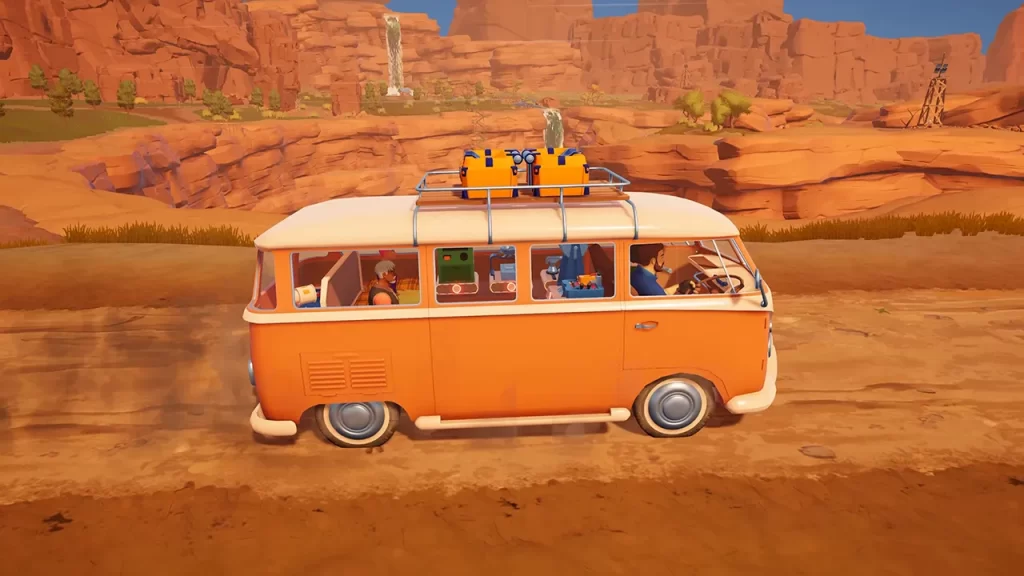
Driving through winding roads while lo-fi music plays in the background genuinely feels calming. Small discoveries — abandoned campsites, scenic overlooks, hidden resources — become rewarding because the world encourages curiosity instead of urgency.
The game’s renewable energy systems are also more engaging than expected.
Power management becomes a core part of progression. Solar panels work best under clear skies, wind turbines perform better in elevated areas, and water-based generators depend on nearby rivers.
This creates subtle decision-making without turning the experience into hardcore survival micromanagement.
Do you prioritize aesthetics or efficiency?
Do you add more batteries at the cost of vehicle weight?
Should you stop driving before nightfall to fully recharge?
These systems are relatively simple individually, but together they create a satisfying rhythm that keeps the game grounded.
The customization is another major strength.
Outbound clearly understands why players love decorating spaces. The van slowly evolves from an empty shell into something personal. By the mid-game, your vehicle starts feeling less like transportation and more like a reflection of your playstyle.
Some players will create sleek minimalist campers powered entirely by solar energy. Others will turn their vans into chaotic mobile farms stacked with furniture, storage crates, and random decorations.
Few games capture the appeal of “tiny home living” this effectively.
Co-op Is Where the Game Truly Comes Alive
While Outbound can be played solo, it’s obvious the game was designed around cooperative play.
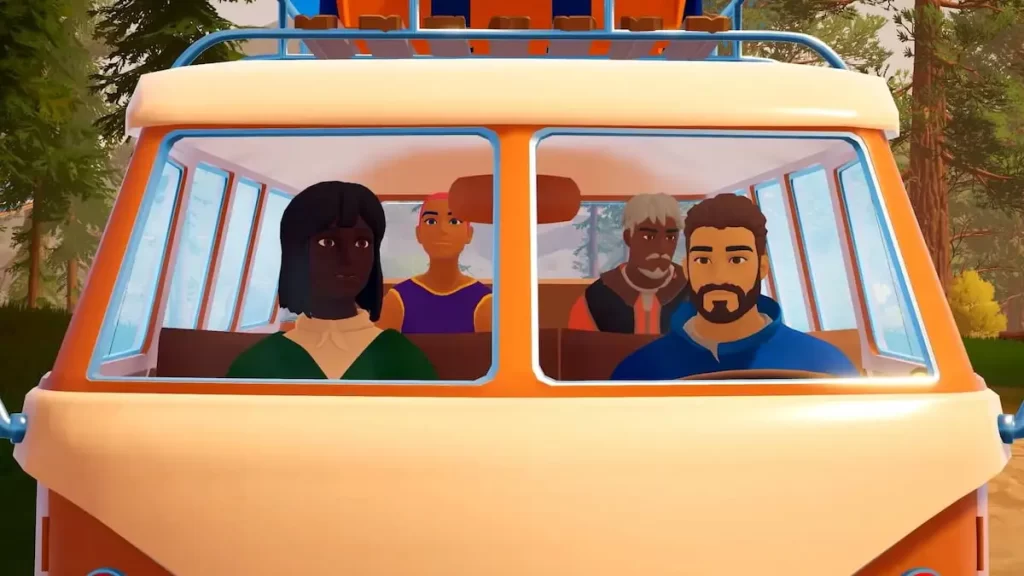
Up to four players can share the same camper van, and this transforms the experience dramatically.
Instead of everyone building separate houses like in most survival games, the entire group lives together inside one moving base. That design creates natural teamwork.
One player gathers resources.
Another handles energy management.
Someone decorates the van.
Someone else navigates routes and explores nearby areas.
Because every system feeds into the same shared vehicle, cooperation feels meaningful rather than optional.
Some of Outbound’s best moments happen organically in multiplayer. Friends arguing over van layout decisions somehow becomes weirdly entertaining. One player accidentally draining the entire battery system before nightfall can create hilarious chaos. Even simple road trips feel memorable because the game encourages shared routines.
This is where Outbound’s unique identity becomes clearest.
Most co-op survival games unite players against enemies. Outbound unites players against inconvenience.
That sounds small, but it changes the entire emotional tone of multiplayer.
Instead of panic and combat stress, the game creates collaborative comfort.
That said, multiplayer isn’t flawless.
Progression is tied to the host’s save file, which means guests don’t always feel equally rewarded for long sessions.
There are also technical rough edges. Launch-week players reported bugs, occasional synchronization issues, and instability during longer co-op sessions.
The developers have already begun patching the game aggressively, but the launch version definitely feels rougher than its polished trailers suggested.
The Biggest Problem: Repetition
As beautiful as Outbound can be, its biggest weakness becomes impossible to ignore after several hours.
The gameplay loop simply doesn’t evolve enough.
Early on, every new blueprint feels exciting. Unlocking new technologies and expanding your van gives the experience a strong sense of momentum. But eventually, the systems begin repeating themselves without introducing meaningful new challenges.
Gather resources.
Drive somewhere else.
Recharge.
Craft upgrades.
Repeat.
The issue isn’t that the loop is relaxing. Relaxing games can absolutely work. The issue is that Outbound struggles to maintain discovery over time.
Exploration often lacks surprise.
Many areas look beautiful but offer limited gameplay variation. Once you understand the core systems, future progression becomes predictable. Several reviewers noted that the world sometimes feels more decorative than interactive, and that criticism feels fair.

There’s also a strange tension between freedom and structure.
Outbound presents itself as an open-ended sandbox, but progression can feel oddly restrictive. You frequently need specific resources or blueprints to continue advancing, which creates repetitive scavenging loops that clash with the game’s otherwise peaceful tone.
At times, it almost feels like the game doesn’t fully trust players to create their own fun.
That’s disappointing because the core premise is so strong.
A game about van life should feel liberating. Sometimes Outbound achieves that perfectly. Other times it feels trapped inside conventional survival-crafting design habits.
A Cozy Game That Sometimes Feels Too Safe
One of the strangest things about Outbound is how carefully controlled everything feels.
The game avoids frustration so aggressively that it occasionally removes excitement too.
Without meaningful danger or unpredictability, progression can start feeling emotionally flat. There’s little sense of risk. Failure rarely matters. Even resource management becomes manageable fairly quickly.
Some players will love this.
Others will desperately wish the game had more friction.
The problem isn’t the absence of combat. Combat-free games can absolutely be engaging. The issue is the absence of strong dynamic systems that create memorable stories.
Games like Minecraft or Valheim generate chaos naturally. Unexpected events force players to adapt. Outbound is much calmer, but that calmness can drift into monotony.
Ironically, the game’s strongest emotional moments often come from tiny unscripted inconveniences rather than major mechanics.
Running low on power during a rainstorm.
Parking in a terrible location and regretting it.
Trying to reorganize an overcrowded van with friends yelling at each other.
These moments work because they feel human.
I almost wish the game leaned harder into that side of itself.
The Atmosphere Carries Everything
Even with its flaws, I kept coming back to Outbound.
That says a lot.
Because objectively, there are deeper survival games. Better crafting systems. More rewarding exploration games. Stronger progression loops.
But Outbound has atmosphere.
And atmosphere can carry a game surprisingly far.
There’s something incredibly comforting about the game’s tone. It feels optimistic in a way modern games rarely do. The “utopian near future” setting avoids cynicism entirely.
No apocalypse.
No societal collapse.
No grimdark storytelling.
Just nature, technology, sustainability, and slow living.
That positivity gives Outbound a unique emotional identity.
Even when the gameplay becomes repetitive, simply existing in the world remains pleasant. Decorating your van during a thunderstorm while ambient music plays is weirdly mesmerizing. Watching sunrise from a mountain campsite feels rewarding despite offering no gameplay advantage whatsoever.
The dog companion also deserves mention because yes, the dog is adorable.
And honestly? Every cozy game benefits from a dog.
The Launch Controversy Didn’t Help
Unfortunately, Outbound’s launch week became messy for reasons unrelated to gameplay.
Shortly after release, players noticed that the developers had responded poorly to negative Steam reviews, reportedly encouraging dissatisfied players to refund the game and remove criticism. This created backlash online and sparked concerns about how the studio handled community feedback.
To their credit, Square Glade Games later apologized publicly and removed those responses.
Still, the situation slightly overshadowed the game’s launch momentum.
It’s unfortunate because Outbound genuinely feels like a project made with sincerity. Even its flaws come across less like cynical design decisions and more like a small studio struggling to fully realize an ambitious idea.
And honestly, I’d rather play an ambitious imperfect game than a polished but soulless one.
Performance and Technical Issues
On PC, performance is mostly solid, though not flawless.
The art style helps keep frame rates stable on mid-range hardware, but there are occasional stutters, especially during multiplayer sessions or when driving quickly through larger environments.
Animation quality is inconsistent. Some interactions feel polished, while others appear stiff or unfinished.
UI design is functional but occasionally clunky, particularly inventory management.
None of these issues are catastrophic, but they reinforce the feeling that Outbound needed a few more months of refinement before launch.
The good news is that the developers appear committed to improving the experience quickly. Early patches have already addressed several multiplayer stability issues.
Final Verdict
Outbound is one of the most charmingly imperfect games of 2026.
It doesn’t fully live up to its incredible premise, but it still offers something genuinely unique. Few games capture the appeal of peaceful road-trip living this effectively. The mobile-home concept is brilliant. The atmosphere is exceptional. Multiplayer creates memorable shared experiences. And the cozy aesthetic is strong enough to keep you invested even when the mechanics begin repeating themselves.
At the same time, the game desperately needs deeper long-term systems. Exploration becomes too predictable. Resource gathering grows repetitive. Progression sometimes feels overly guided for a sandbox game built around freedom.
Whether you enjoy Outbound will depend entirely on what you want from it.
If you’re searching for a hardcore survival experience filled with tension and complexity, this probably isn’t your game.
But if the idea of slowly building a sustainable camper van while wandering through beautiful landscapes sounds appealing, Outbound absolutely delivers moments that feel special.
It’s less about conquering a world and more about learning how to exist comfortably within it.
And honestly, that’s a fantasy many people probably need right now.
