
Whirlight – No Time To Trip: A Whimsical, Time-Bending Adventure That Feels Like Coming Home
I’ll be honest: I went into Whirlight – No Time To Trip expecting a solid follow-up to imaginarylab’s Willy Morgan and the Curse of Bone Town. What I got instead was one of the most charming, visually stunning, and genuinely fun point-and-click adventures I’ve played in years. Released on May 14, 2026, this Italian-developed gem doesn’t just pay homage to the LucasArts classics—it feels like it belongs right alongside them, with its own quirky personality shining through. Clocking in at around 12-15 hours, it’s a proper epic that had me grinning, scratching my head, and occasionally muttering “you’ve got to be kidding me” at the screen. In the best possible way.
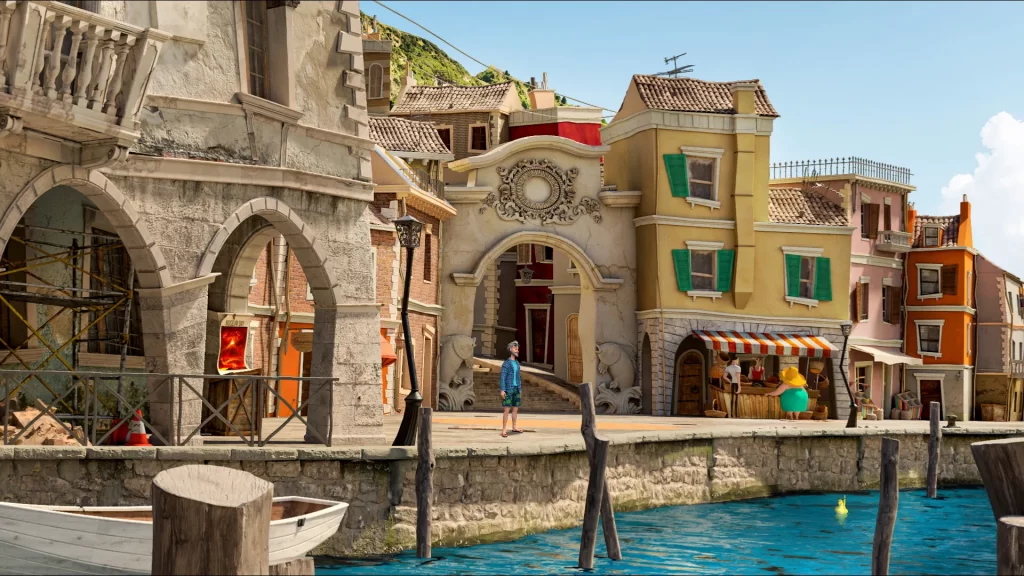
Let’s start with the setup, because it hooks you immediately. You play as Hector May, a middle-aged, gray-haired inventor living in the sun-drenched, canal-laced Verice Bay—a fictional coastal town that screams “1960s Italian-American dream” with its gondolas, Gothic architecture, and laid-back vibe. Hector isn’t your typical hero. He’s a bit of a mess: brilliant but clumsy, rocking Bermuda shorts and a hippie aesthetic, with a voice that sounds like he’s been chain-smoking while tinkering in his garage. His inventions usually flop spectacularly, but one inspired dream sequence (full of surreal Dali-esque weirdness, giant frogs, and glowing butterflies) sparks his greatest idea yet: the Light Squeezer. This device turns light into liquid, and drinking the right combo lets you hop through time and space.
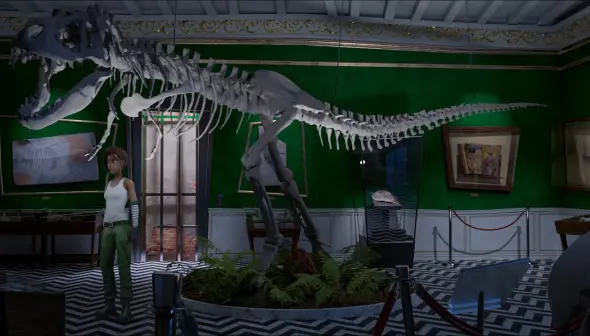
Of course, nothing goes according to plan. Hector’s first real test run sends him tumbling into the 1990s, where you meet Margaret Harck—an artist, sculptor, and the perfect foil to Hector’s chaotic energy. She’s practical, resourceful, and initially skeptical, but the two form an unlikely duo that drives the rest of the story. What begins as a simple “get the inventor home” quest spirals into multi-timeline shenanigans, butterfly effects, separated characters, and eventually a wild race to save the world from an unexpected threat. It’s light-hearted sci-fi with heart, humor, and just enough absurdity to keep things fresh.
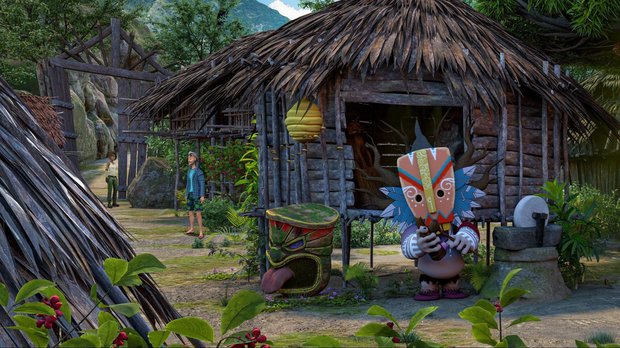
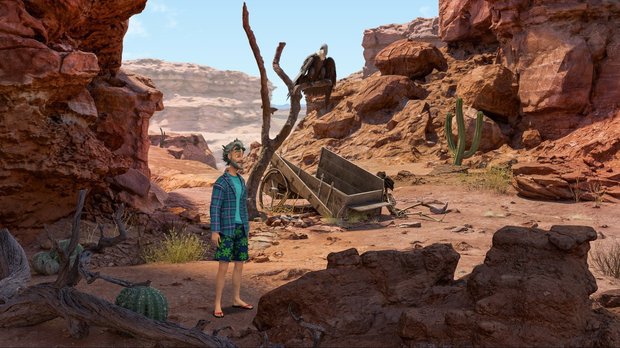
The story unfolds across three main chapters, shifting perspectives between Hector and Margaret. You’ll revisit Verice Bay in different eras—1960s, 1990s, and even a post-apocalyptic 2045—watching how locations evolve. The toy shop becomes an arcade, the ice cream stand turns into a burger joint. Time of day matters too: morning musicians, evening security guards, nighttime quiet. Later, the game opens up with a motorbike sidecar for free(ish) travel between wildly different spots: a desert monastery, a North Pole lab, a vineyard, a bar at the edge of space and time, and even historical Sussex. It never feels overwhelming, though. Progress is gated cleverly by puzzles and story beats.
What makes the narrative sing is the writing and characters. Hector and Margaret’s banter is gold—witty without trying too hard, full of mutual ribbing that feels earned. The supporting cast is packed with memorable weirdos: shopkeepers with their own little dramas, a rival inventor named Theodore, cult members, tribespeople from 10,000 years ago, and more. Everyone has a personality, a motivation, and often a fetch quest tied to their story. It’s not just filler; solving someone’s problem usually pays off in unexpected, delightful ways. The humor lands consistently—slapstick falls, deadpan observations, pop culture nods, and that classic adventure-game absurdity. Think Day of the Tentacle meets a lighter Rick and Morty vibe, minus the cynicism.

Now, the gameplay. At its core, this is pure, old-school point-and-click. One-click to interact (examine, pick up, use), right-click for hotspot highlighter (thank goodness, because those hand-painted backgrounds are dense), double-click to run or exit. Inventory scrolls up from the bottom. You combine items, use them on the world, talk to people with branching dialogues that update as the world changes. No pixel-hunting nightmares, but you will backtrack—a lot—and that’s part of the charm.
The puzzles are the star. Early on, they’re layered fetch-quests and environmental tweaks. Later, they become gloriously multi-timeline. Actions in one era ripple into others. You’ll need to figure out the perfect time of day, the right character for the job (Hector’s good with tools, Margaret with scissors and creativity), and swap items between them. Want to light something on fire? Better have a fuse ready, and maybe revisit after progressing the main plot. Some solutions are batshit crazy in that wonderful adventure-game logic way—combining random junk into something ingenious that makes total sense once you see it.
That said, it’s not flawless. A few puzzles lean too obtuse, relying on persistence or trial-and-error. You might need to repeat actions without clear signposting—talk to someone again, try the same item twice—because the game doesn’t always telegraph that progress elsewhere unlocked a new response. No big hint system either, just dialogue nudges and a basic checklist. Newcomers might hit walls and reach for a guide; veterans will relish the brain-teasing. I got stuck a couple times, walked away, came back, and facepalmed at the “obvious” solution. Frustrating in the moment, but satisfying overall. No dead ends or unwinnable states, which is appreciated.
Visually, Whirlight is a feast. The hand-painted, photorealistic-yet-cartoony backgrounds pop with color and detail. Verice Bay feels alive—pigeons cooing, changing light across eras, bustling (or empty) streets. Character models and animations are expressive: Hector’s goofy dance, slapstick tumbles, fluid movements. Inventory use on hotspots sometimes looks a bit floaty (empty-hand syndrome), but it’s a minor gripe. The dream sequences and futuristic spots go wild with creativity. It’s one of those games where you just stop to admire the scenery.
Audio seals the deal. The soundtrack shifts perfectly with eras and locations—jazzy 60s, New Age 90s, tense apocalyptic drones, relaxing guitar in the vineyard. Voice acting is excellent across the board. Jeffrey Machado nails Hector’s raspy, improvisational brilliance. Larissa Crowe brings Margaret to life as the grounded straight(ish) woman. Side characters feel authentic, never cartoonishly overacted. Sound effects are spot-on: zany inventions, crackling fires, ambient life. It’s cinematic without being pretentious.
Comparisons are inevitable. Fans of Monkey Island, Sam & Max, Day of the Tentacle, or even imaginarylab’s own Willy Morgan will feel right at home. It captures that exploratory joy and puzzle-solving euphoria better than most modern revivals. It’s not as dialogue-heavy as some, nor as puzzle-brutal as the hardest classics. It strikes a lovely middle ground: accessible enough for genre newcomers who don’t mind thinking, deep enough for veterans.
Pros:
- Absolutely gorgeous, vibrant world that evolves beautifully across time.
- Lovable protagonists and memorable supporting cast.
- Clever, layered time-travel puzzles with real “aha!” moments.
- Humorous writing and top-tier voice acting.
- Solid length with great pacing—never overstays its welcome.
- Excellent soundtrack and atmosphere.
Cons:
- Occasional obtuse puzzles and lack of clear signposting.
- Switching characters can feel a tad cumbersome.
- Minor animation quirks with item use.
- Might frustrate absolute beginners without a gentle hint system.
In the end, Whirlight – No Time To Trip is a love letter to the golden age of adventures that actually delivers on the promise. imaginarylab poured passion into every pixel, line of dialogue, and puzzle. It’s whimsical, heartfelt, funny, and just challenging enough to feel rewarding. In a world of live-service grind and hyper-realistic shooters, a game like this reminds you why we fell in love with gaming: exploration, discovery, laughter, and that pure satisfaction of cracking a tough nut.
If you have any affection for point-and-clicks, buy it. Even if you’re on the fence, the demo gives a great taste. I finished it with a big smile and immediately wanted more. Here’s hoping imaginarylab keeps the momentum—Verice Bay (and its time-hopping residents) deserves revisits. 9/10. I’d time-travel back to play it again in a heartbeat. No trip necessary.
