

Mixtape Review — A Road Trip Through Memory, Music, and Growing Up
When people talk about games that capture a moment in life, they usually mean titles built around huge emotional twists or cinematic storytelling. But every once in a while, a game arrives that understands something quieter and far more difficult to recreate: the strange, fleeting feeling of being young and realizing that everything is about to change.
That is exactly what Mixtape sets out to do.
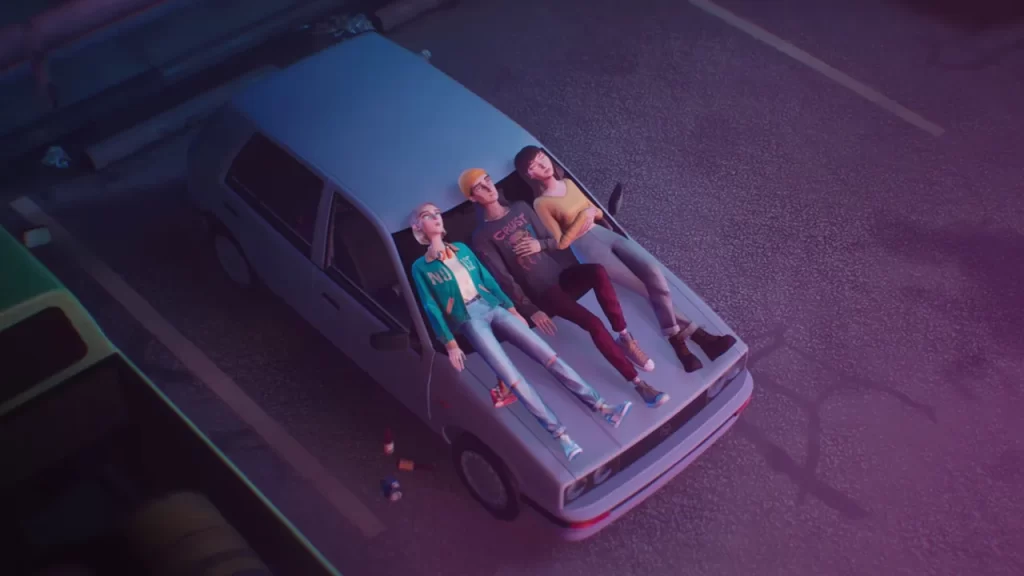
Released on May 7, 2026, by Annapurna Interactive and developed by Beethoven & Dinosaur, Mixtape is less interested in traditional gameplay loops than it is in emotional texture. It’s a coming-of-age adventure wrapped in music, nostalgia, awkward humor, and late-night conversations that feel startlingly authentic. The result is one of the most emotionally resonant indie games of the year — not because it tries too hard to be profound, but because it understands how ordinary moments become unforgettable memories.
At first glance, Mixtape looks like another stylish narrative indie game. Teenagers. Road trips. Skateboards. Neon lights. A killer soundtrack. We’ve seen all these ingredients before. Yet the magic of Mixtape lies in how naturally it blends them together. Instead of presenting a heavily dramatized story, it creates an experience that feels lived-in. Every scene carries the warmth of memory — slightly exaggerated, deeply personal, and tinged with melancholy.
The game follows three friends on their final night together before life pulls them in different directions. College, distance, uncertainty, and adulthood hang over every interaction, even during the funniest moments. The road trip premise becomes a vehicle for reflection, allowing players to drift through memories, fantasies, confessions, and musical set pieces that blur the line between reality and emotional recollection.
What makes Mixtape special is that it never feels desperate to impress the player. It simply invites you to sit with these characters for a while. By the end, you don’t feel like you “beat” a game. You feel like you said goodbye to people you genuinely knew.
A Story Built on Memory Rather Than Plot
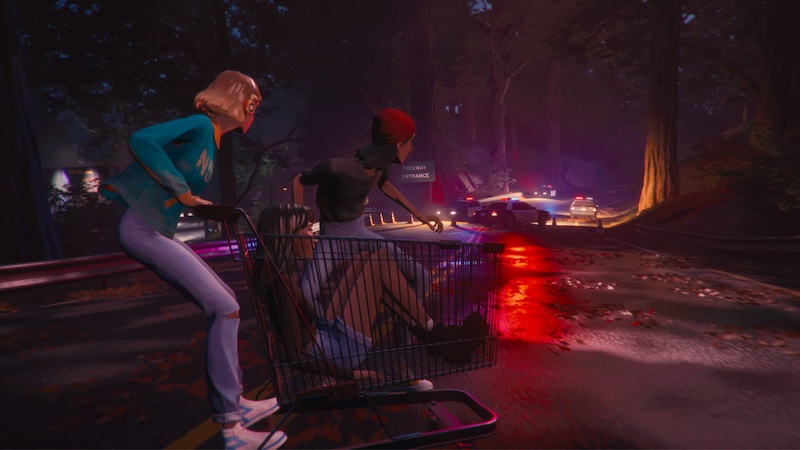
The first thing players expecting a traditional narrative adventure should know is that Mixtape isn’t driven by plot twists. There are no giant mysteries, world-ending stakes, or shocking betrayals waiting around the corner. Instead, the game revolves around emotional accumulation.
The premise is simple. Three close friends head out for one final night together before their lives split apart. Through conversations, music-driven sequences, flashbacks, and surreal interactive moments, the game explores friendship, identity, insecurity, and the fear of growing apart.
The brilliance lies in the writing’s restraint.
The characters don’t constantly explain themselves. They interrupt each other. They avoid certain topics. They joke at the wrong moments. They exaggerate stories they’ve already told a hundred times. Their chemistry feels messy in the way real friendships do.
This authenticity is what elevates the game above many narrative indies that mistake endless dialogue for emotional depth. Mixtape understands silence. Some of the best scenes involve nothing more than characters sitting in a car while music plays softly in the background. The pauses matter just as much as the conversations.
Each character also feels distinct without becoming exaggerated archetypes. One masks vulnerability with humor. Another struggles with uncertainty about the future. The third seems emotionally grounded but quietly fears abandonment. None of these traits are delivered through dramatic monologues. Instead, they emerge gradually through interactions and shared experiences.
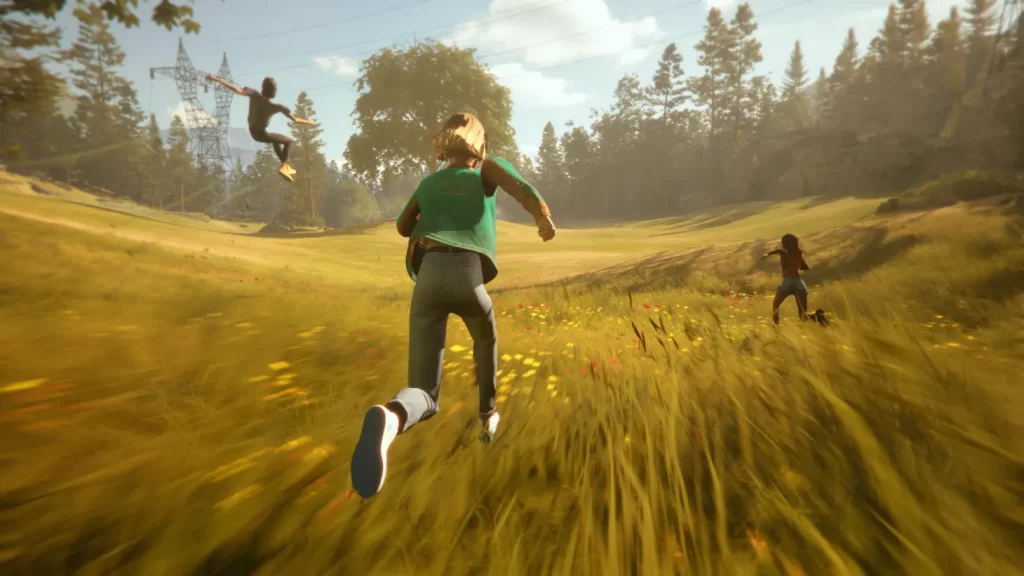
By the midpoint, the game begins shifting into dreamlike memory sequences that represent how these characters view their shared past. This is where Mixtape truly becomes unique. Instead of literal flashbacks, memories become playable emotional recreations. A skateboarding segment transforms into a euphoric music video. A concert memory explodes into surreal visual chaos. A late-night drive becomes an abstract meditation on leaving childhood behind.
These moments could have felt pretentious in another game. Here, they feel earned because the emotional foundation is so grounded.
The Soundtrack Is the Heartbeat of the Entire Experience
It’s impossible to discuss Mixtape without talking about its music.
The soundtrack isn’t merely background audio. It’s the structure holding the entire game together. Every major emotional beat is tied to music in some way, and the developers clearly understand the deeply personal relationship people have with songs connected to memory.
Much like real-life mixtapes, the soundtrack jumps between moods and genres while still feeling cohesive. One moment you’re drifting through dreamy indie rock, and the next you’re immersed in energetic punk or nostalgic synth-heavy tracks. The transitions feel carefully curated rather than algorithmically assembled.
What makes the soundtrack especially effective is how dynamically it interacts with gameplay. Music swells during emotional breakthroughs and fades during uncomfortable silences. Some sequences are choreographed almost like interactive music videos, but they never feel gimmicky.
There’s one sequence midway through the game involving a rooftop party and a slow realization that everyone’s lives are moving forward whether they’re ready or not. The combination of lighting, dialogue fragments, and music creates one of the most emotionally powerful scenes in recent indie gaming.
Importantly, Mixtape avoids the trap of weaponizing nostalgia too aggressively. It doesn’t simply throw recognizable songs at the player to manufacture emotion. Instead, it uses music the way people actually experience it — as emotional timestamps tied to specific memories.
Players will almost certainly walk away with several tracks permanently associated with moments from the game. That’s a rare achievement.
Visual Style That Feels Like a Living Memory
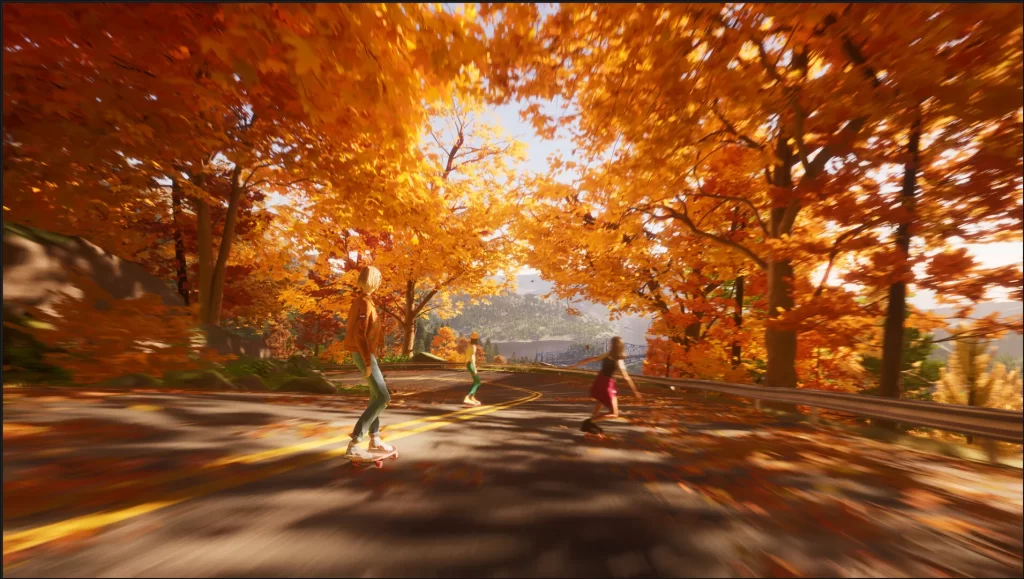
Visually, Mixtape is stunning without chasing photorealism.
The art direction leans into stylized realism with vibrant lighting, dreamy color palettes, and subtle surrealism that intensifies as the story progresses. The environments often resemble idealized memories rather than literal spaces. Streetlights glow a little too warmly. Sunsets linger slightly longer than they should. Empty parking lots feel strangely beautiful.
This aesthetic choice perfectly complements the game’s themes.
Memories are rarely accurate recrections of reality. We soften edges, heighten emotions, and romanticize details over time. Mixtape visually represents that phenomenon in fascinating ways.
The animation work deserves special praise as well. Character movements feel natural and slightly awkward in a way that enhances realism. The small gestures — avoiding eye contact, fidgeting during vulnerable conversations, leaning against car doors during quiet moments — communicate enormous emotional information without dialogue.
The game also uses visual transitions brilliantly. Instead of hard cuts between scenes, moments often bleed into one another like fragmented recollections. A character staring out a car window might transition seamlessly into a childhood memory or stylized fantasy sequence.
These transitions give the game a dreamlike rhythm that becomes hypnotic after a few hours.
There are also several sequences that completely abandon realism in favor of pure emotional abstraction. One particularly memorable section transforms a teenage anxiety spiral into a surreal side-scrolling concert nightmare filled with distorted imagery and overwhelming sound design. Another sequence presents a memory as a floating interactive scrapbook of disconnected objects and fragmented audio.
These artistic risks pay off because they reflect emotional truth rather than narrative logic.
Gameplay That Prioritizes Feeling Over Challenge
Players looking for deep mechanical systems may find Mixtape surprisingly simple. The gameplay primarily revolves around exploration, dialogue interaction, environmental storytelling, and short stylized mini-games tied to memories and music.
But simplicity is intentional here.
The game is designed to create emotional immersion rather than mechanical mastery. Every interaction exists to reinforce tone, character, or atmosphere. Skateboarding sections aren’t about technical skill; they’re about freedom. Rhythm-based sequences aren’t difficult because they’re meant to evoke participation rather than competition.
That said, not every gameplay idea works equally well.
A few interactive segments feel underdeveloped, particularly during the later chapters where pacing occasionally becomes uneven. Some mini-games are visually inventive but mechanically shallow. Players expecting substantial gameplay evolution across the experience may feel slightly disappointed.
However, criticizing Mixtape solely for mechanical simplicity misses the point somewhat. This is a game operating in the tradition of interactive storytelling experiences where emotional engagement matters more than challenge.
And emotionally, it succeeds far more often than it stumbles.
The strongest gameplay moments occur when mechanics and storytelling fully align. During one sequence, players ride through a city at night while snippets of old conversations fade in and out around them. There’s almost no “gameplay” in the traditional sense, yet the interactivity creates emotional intimacy impossible in passive media.
You aren’t merely watching memories. You’re inhabiting them.

Dialogue That Actually Sounds Human
Writing believable young adult characters is surprisingly difficult. Games often fall into one of two traps: exaggerated slang-heavy dialogue that feels painfully artificial, or overly polished conversations where every character sounds like a novelist.
Mixtape avoids both.
The dialogue feels observational rather than scripted. Conversations overlap naturally. Jokes fail. Characters ramble when nervous. Emotional confessions emerge awkwardly instead of perfectly timed for dramatic impact.
There’s also an impressive amount of emotional subtext. Characters frequently discuss trivial things while clearly avoiding larger anxieties simmering beneath the surface. The game trusts players to interpret these dynamics instead of explaining everything outright.
Humor plays a major role too. Despite its emotional themes, Mixtape is often genuinely funny. The comedy doesn’t rely on meme culture or forced references. Instead, it comes from personality clashes, shared history, and the awkwardness of people trying to avoid emotional vulnerability.
This balance between humor and melancholy is one of the game’s greatest strengths.
Real friendships are rarely purely dramatic or purely comedic. They constantly oscillate between the two. Mixtape captures that rhythm beautifully.
The Game Understands the Terror of Growing Up
At its core, Mixtape is about transition.
Not dramatic transformation. Not life-changing revelations. Just the quiet realization that certain periods of life end whether you’re emotionally prepared or not.
That theme resonates deeply throughout the experience.
The game understands how terrifying adulthood can feel when viewed from the edge of adolescence. Not because adulthood itself is inherently awful, but because it threatens the identities and relationships that once felt permanent.
The characters spend much of the game pretending everything will stay the same even while knowing it won’t. That tension creates an undercurrent of sadness beneath even the happiest moments.
Importantly, Mixtape doesn’t become cynical about growing older. It acknowledges loss without romanticizing stagnation. The story recognizes that change is painful precisely because meaningful relationships matter so much.
This emotional maturity separates it from many nostalgia-focused narratives that simply glorify youth while demonizing adulthood. Mixtape understands that memories become beautiful partly because they cannot last forever.
That perspective gives the ending tremendous emotional power.
Without spoiling specifics, the final act avoids manipulative melodrama in favor of something quieter and more truthful. The emotional impact comes not from shocking events but from accumulated intimacy. By the conclusion, players aren’t mourning fictional tragedy. They’re mourning time itself.

Technical Performance and Pacing Issues
For all its strengths, Mixtape isn’t flawless.
The pacing occasionally struggles during the middle sections where certain memory sequences linger longer than necessary. A few interactive moments feel repetitive, particularly when the game revisits familiar emotional beats without adding new insight.
Technical performance is mostly solid, though minor animation glitches and occasional frame pacing issues appear during visually dense sequences. None of these problems seriously damage the experience, but they are noticeable.
Some players may also find the game overly stylized or emotionally indulgent. Mixtape embraces sincerity wholeheartedly, which means anyone resistant to introspective storytelling may struggle to connect with it.
The game also assumes players are willing to engage emotionally rather than critically dissect every narrative decision. Those seeking tightly structured plot progression or heavily branching choices might feel underwhelmed.
But for players open to what the game is attempting, these flaws become relatively minor compared to the overall emotional experience.
One of the Most Authentic Coming-of-Age Games in Years
Video games have explored coming-of-age stories before, but few have captured the emotional ambiguity of transitional periods as effectively as Mixtape.
Many stories about youth rely heavily on exaggerated drama or simplistic nostalgia. Mixtape succeeds because it embraces contradiction. It understands that growing up is exciting and terrifying simultaneously. Friendships can feel eternal while quietly dissolving. Beautiful moments often become meaningful only in retrospect.
The game also benefits enormously from confidence in its identity. It never tries to become an action game, a massive open-world adventure, or a heavily gamified narrative system. It remains focused on emotional immersion from beginning to end.
That creative clarity makes the experience feel remarkably cohesive.
There’s a sincerity here that’s increasingly rare. The game isn’t cynical, overly ironic, or desperate to appear emotionally profound. Instead, it simply observes people with empathy and honesty.
That may sound simple, but it’s incredibly difficult to achieve.
Final Verdict
Mixtape is one of 2026’s most emotionally affecting indie games — a beautifully crafted exploration of friendship, memory, music, and the painful inevitability of change.
It won’t appeal to everyone. Players seeking complex gameplay systems or heavily plot-driven storytelling may find its introspective pacing too subdued. But for those willing to embrace its atmosphere and emotional honesty, Mixtape delivers an experience that lingers long after the credits roll.
Its greatest achievement is making ordinary moments feel monumental. A late-night drive. A shared song. An awkward conversation. A laugh that lasts slightly too long because nobody wants the night to end.
That’s what the game understands better than most: life-changing memories rarely announce themselves while they’re happening.
Sometimes they just feel like another night with friends.
And then suddenly, years later, they become everything.
Mixtape captures that feeling with extraordinary grace.
