
The Caribou Trail: A Quiet March Through Mud, Memory, and Brotherhood in Gallipoli
I’ll be honest: when I first booted up The Caribou Trail, I wasn’t sure what I was getting into. The trailers showed first-person views of trenches, barbed wire, and distant gunfire, so my brain defaulted to “another WWI shooter.” Boy, was I wrong. This isn’t Verdun or Tannenberg. It’s not even trying to be. Instead, it’s something rarer—a short, intimate narrative experience that asks you to survive the boredom, the fear, and the small human moments that glue soldiers together when the world is trying to tear them apart.

Developed by Montreal’s Unreliable Narrators (with ManaVoid Entertainment) and released on May 14, 2026 for PC (with PS5 following in July), The Caribou Trail follows three young Newfoundlanders—Fisher (you), the quick-witted troublemaker Gordon, and the dreamy Lonnie—as they ship off to the Gallipoli campaign in 1915. They expect a grand adventure, “home before the leaves fall.” What they get is dirt, loss, dubious stew, and the slow erosion of innocence.
At around 3 to 6 hours depending on how much you poke around (I landed at about 4.5 with some exploration and a couple reloads for choices), it’s deliberately compact. That length is both its greatest strength and occasional frustration. It never overstays its welcome, but it sometimes feels like it could have breathed deeper in places. Still, by the time the credits rolled, I sat there in the dark for a good ten minutes, staring at nothing. That doesn’t happen often.
The Setup: From the Rock to Another Rock
Newfoundland in 1915 wasn’t yet part of Canada. The Royal Newfoundland Regiment sailed off as its own force, part of the British effort to force the Dardanelles. Historically, over a thousand Newfoundlanders went to Gallipoli; disease, injury, and combat whittled them down hard. The game draws from real testimonies, the Blue Puttees (their distinctive socks), ugly sticks made from broomsticks and whatever was lying around, and the grim reality of the Suvla Bay landing and eventual evacuation.
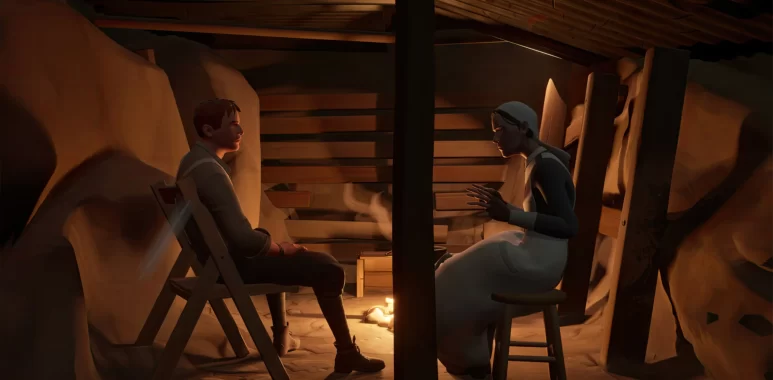
You play as Fisher, the middle ground between his two friends. Gordon (“Gordo”) is the loud, insufferable-but-lovable one who cracks jokes at the worst times and would die for you without hesitation. Lonnie is the sensitive dreamer who probably shouldn’t be there but brings warmth and the occasional spooky story around the fire. Their banter feels authentic—Newfoundland slang flows naturally, full of “b’y” this and “where ya at” that. It never feels forced; these are mates from the same harbor town trying to keep each other sane.

The story frames itself as Fisher recounting (or perhaps misremembering) events later, around another fire back home or in France. This unreliable narrator device works brilliantly. It lets the game blur the line between trauma, folklore, and psychological strain. Are those whispers in the dark just wind, or something drawn to the living? The game leans into Newfoundland folklore and soldier superstitions without tipping fully into horror, though some segments get genuinely unsettling.
Gameplay: Walking, Digging, Listening, Surviving
Let’s get this out of the way: if you’re here for gunplay, you’ll be disappointed. Combat is minimal and often optional. There are a couple of tense moments—crawling through no-man’s-land, cutting barbed wire, a chaotic evacuation—but the rifle is in your hands sparingly. The goal isn’t to rack up kills. It’s to endure.
Most of your time is spent navigating the trenches and camp using a map and compass. You’ll dig trenches, collect dog tags from fallen comrades (a haunting task), deliver messages, help with mundane chores, and explore when the game lets you. There’s light stealth in places, some basic interactions, and a recurring cooking minigame where you prepare “fish and brewis” from hardtack, salt cod, and whatever else is lying around. Smashing ingredients while your mates chat is oddly meditative—and a perfect metaphor for finding ritual in chaos.
Exploration rewards you with collectibles: letters, carvings on shell casings, historical notes about the Blue Puttees or how the regiment earned the Caribou Hill name. These aren’t just fluff; they ground the fiction in reality and deepen the sense of place. Dialogue choices exist, some small, a few with bigger ripple effects on relationships or specific scenes. You can choose to fire your weapon at key moments or show mercy (war doesn’t always let mercy stand, as I learned the hard way). But the game is largely linear. It’s an interactive storybook more than a sandbox, and it owns that identity.
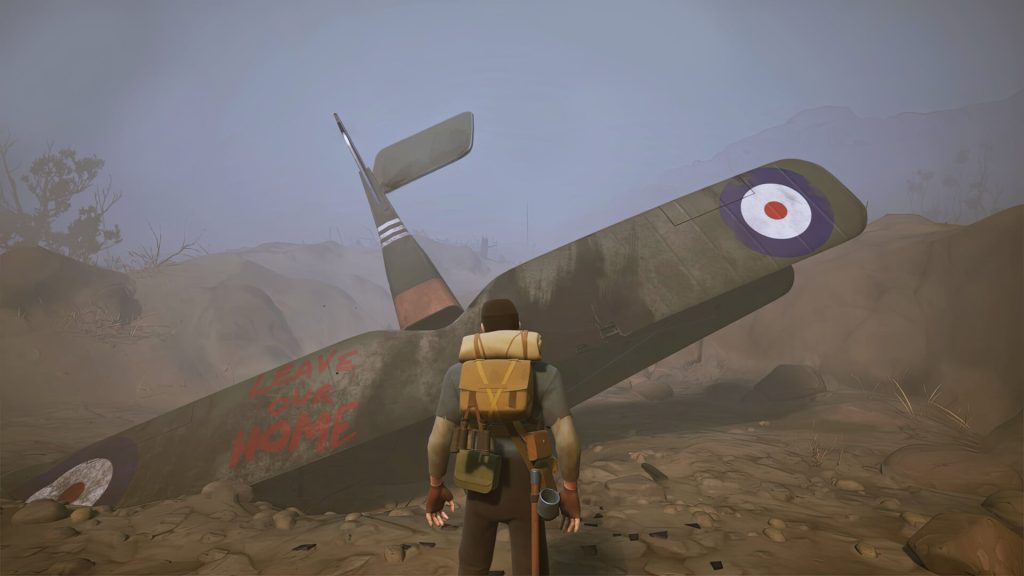
Some players will bounce off the slow pace and limited freedom. My own run had moments where I wanted to wander farther or have more agency in camp life. Fisher’s run speed is comically slow at times, which fits the exhaustion of a soldier but can test patience. Yet sticking with it pays off. The repetition of tasks mirrors the grinding monotony of war—the waiting, the small talk, the endless digging. When action does hit, it lands harder because of that buildup.
Atmosphere and Presentation: Mud You Can Almost Smell
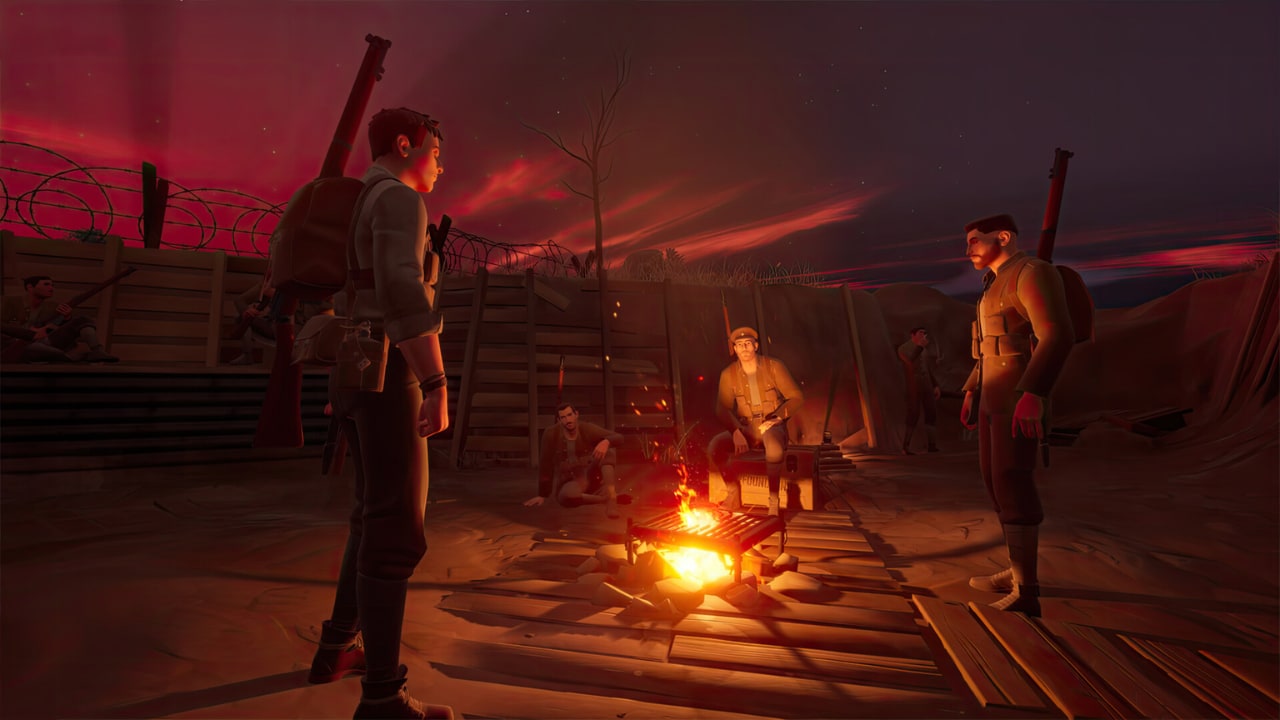
Visually, the game uses a semi-stylized look inspired by archival photos. It’s not hyper-realistic, which helps it feel timeless and dreamlike, especially in the folklore-tinged night sequences. Trenches feel claustrophobic, no-man’s-land desolate and terrifying under flares. Lighting and weather shift beautifully—dawn over the Aegean, pouring rain turning everything to slurry, the eerie quiet after shelling.
Sound design is outstanding. Distant artillery rumbles, the constant drip of water, boots squelching in mud, the crackle of a campfire. The original score is haunting without being overbearing, mixing folk influences with somber orchestral pieces. Voice acting shines, especially the trio’s natural chemistry. Swearing is present but restrained—realistic for the era without feeling gratuitous. Newfoundland accents are spot-on and add tremendous warmth.
The psychological elements work because they’re subtle. Shadows move wrong sometimes. Ghost stories told around the fire bleed into reality. One late-game sequence had me questioning what was real, and the payoff ties beautifully into themes of memory and survival.
The Heart of It: Brotherhood in the Mud
What elevates The Caribou Trail is its focus on the quiet bonds. The cooking sessions, the banter while digging, sharing letters from home, the way Gordo teases Lonnie but protects him fiercely. These aren’t hardened killers; they’re fishermen, dreamers, and young men who enlisted for adventure or to escape trouble back home. War strips them down, but it also reveals who they really are.
I won’t spoil the later twists or the ending, but it hits like a gut punch. The game earns its emotional weight through accumulation—the small losses, the jokes that stop being funny, the growing silence. One choice I made (or didn’t make) left me staring at the screen, rethinking everything. It’s not preachy about war’s horrors; it shows them through the eyes of ordinary people trying to hold onto humanity.
The Caribou Trail itself—named after the monuments marking Newfoundland’s WWI sites—becomes a metaphor for the path these men walk: marked by resilience, loss, and the stories we carry forward.
Criticisms and Who It’s For
It’s short. At full price (~$13), some might feel it’s light on content. If you crave mechanical depth, open worlds, or replayability beyond a few choice branches and collectibles, this might not satisfy. Performance is solid post-launch (smoother than some early reports), but occasional camera clipping or very directed moments can pull you out briefly.
This is a game for people who love walking simulators, narrative adventures like What Remains of Edith Finch or The Vanishing of Ethan Carter, or historical pieces like Valiant Hearts. It’s perfect for a single focused evening or two. Teachers should consider it—pair it with lessons on Gallipoli or Newfoundland history, and it would spark real discussion.
Final Thoughts

The Caribou Trail isn’t trying to be the definitive WWI game. It’s a love letter to a specific group of soldiers whose story often gets overshadowed, told with care, atmosphere, and heart. It reminds us that war is mostly waiting, small kindnesses, and trying not to break. The laughs around the stew pot matter as much as the moments under fire.
I came for potential action and stayed for the people. By the end, I felt like I’d lost friends I never really had. In a medium full of power fantasies, that’s something special.
If you have a few hours, a decent pair of headphones, and willingness to slow down, step into Fisher’s boots. Bring tissues. And maybe skip dinner first—the stew descriptions might ruin your appetite.
Score: 8.5/10 (or a strong 9 if you’re in the target audience for intimate narratives). Highly recommended for the right player. B’y, it’s worth the march.
