
Clockwork Ambrosia — A Steampunk Metroidvania Built on Obsession
Fourteen years is a dangerous amount of time to spend making a video game.
That kind of development cycle usually leads to one of two outcomes: either the project collapses under the weight of its ambition, or it emerges as something so deeply personal that every pixel feels handcrafted with stubborn determination. Clockwork Ambrosia somehow lands in the middle of those two extremes. It is messy in places, brilliant in others, occasionally frustrating, and frequently unforgettable.
Released on May 12, 2026 for PC, the steampunk Metroidvania from Realmsoft and Omega Intertainment has quietly become one of the most interesting indie releases of the year.
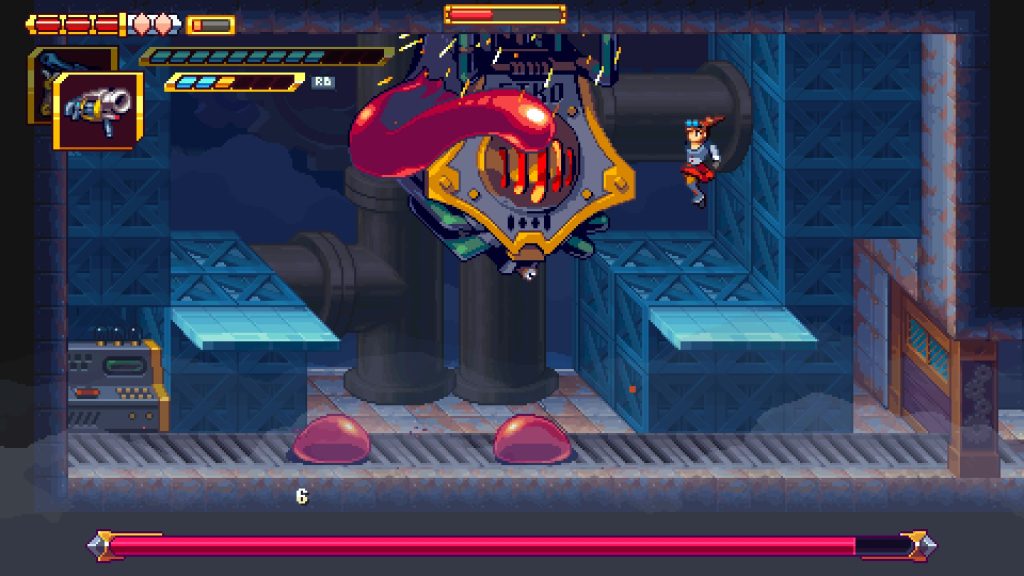
At first glance, Clockwork Ambrosia looks like another retro-inspired indie platformer trying to channel the ghosts of Super Metroid and Mega Man X. Spend an hour with it, though, and you realize it has a very different identity. This is a game obsessed with systems. It wants players to experiment, break combat apart, rebuild weapons into absurd instruments of destruction, and slowly learn the rhythms of a world that refuses to hold their hand.
It is not a game designed for instant gratification.
And honestly, that is exactly why it works.
A World Powered by Rust, Steam, and Mystery
Clockwork Ambrosia places players in the boots of Iris, an airship engineer who crashes onto the isolated island of Aspida after a catastrophic accident. The setup sounds simple enough, but the game wastes little time turning that premise into something stranger and more atmospheric.
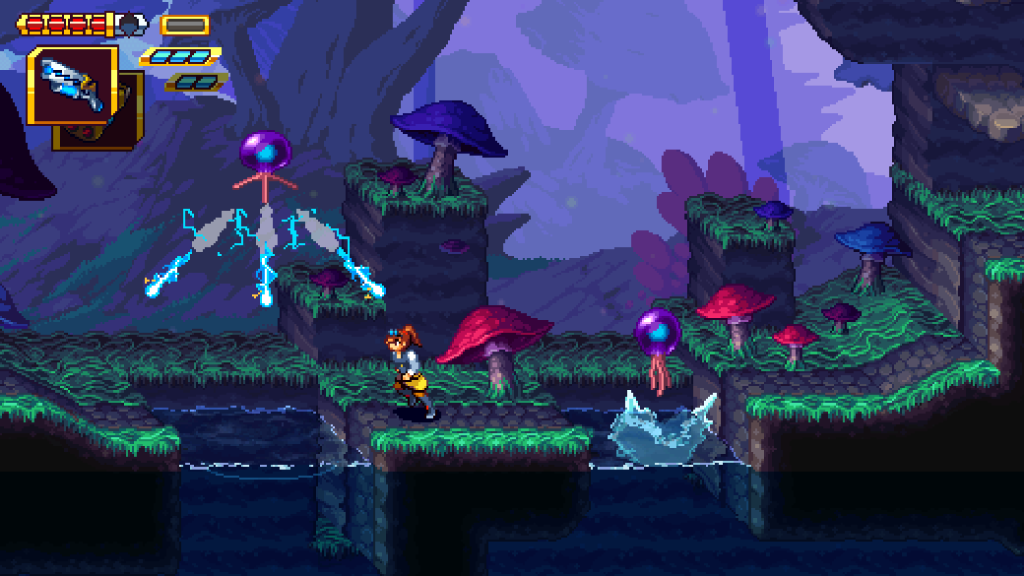
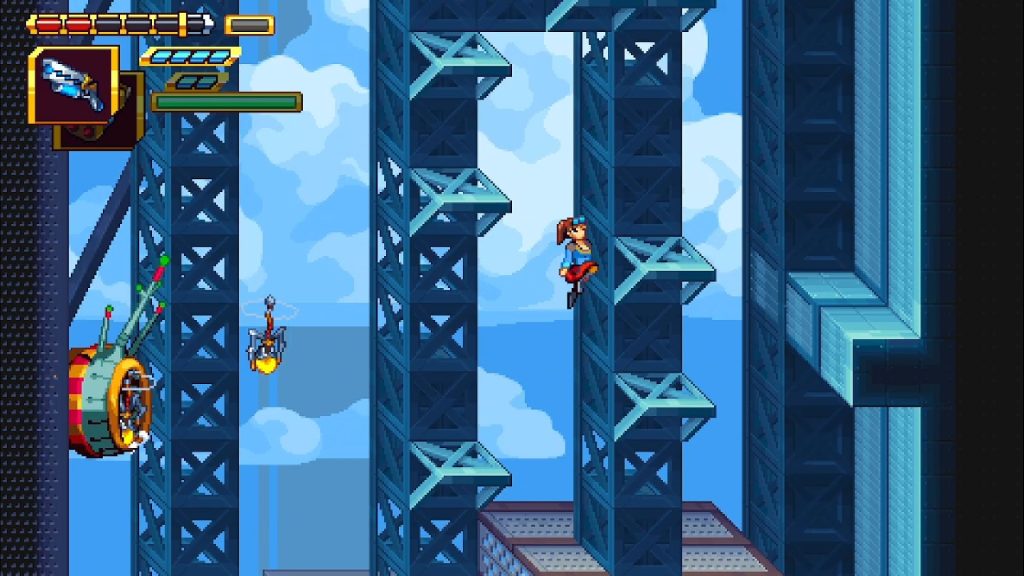
Aspida is not just another ruined fantasy kingdom. It feels mechanical and decayed at the same time — a civilization suspended somewhere between industrial progress and total collapse. Machines wander empty cities. Ancient factories still breathe smoke into the sky. Mushroom forests glow beneath abandoned steel towers. The deeper you explore, the more the island feels haunted by forgotten experiments and failed ambition.
The storytelling is subtle for most of the experience. Instead of drowning players in exposition, the game leans heavily on environmental storytelling. Broken machinery, hidden labs, malfunctioning robots, and scattered journals slowly build the history of Aspida piece by piece.
That approach gives Clockwork Ambrosia a sense of loneliness that many modern Metroidvanias struggle to capture. The world feels abandoned, but never empty.
And visually, it is stunning.
The pixel art balances detail with readability in a way that many retro-inspired games fail to achieve. Backgrounds are packed with moving gears, distant machinery, rain effects, and flickering lights, yet combat remains easy to track even during chaotic encounters. The steampunk aesthetic could have become visually overwhelming, but Realmsoft keeps everything surprisingly clean.
Several environments genuinely stand out. The sky cities hanging above the clouds are gorgeous. The fungal caverns pulse with eerie color. The underwater ruins feel oppressive and ancient. Every biome has a distinct identity, and that diversity keeps exploration engaging even during slower stretches.
It also helps that the soundtrack absolutely nails the mood.
The music swings between melancholic synth-heavy ambient tracks and energetic industrial battle themes. Some songs feel intentionally retro, almost like lost Sega CD compositions, while others sound modern and cinematic. It is one of those soundtracks that quietly grows on you until you realize you have been humming its melodies all day.
The Real Star of the Game: Weapon Customization
Most Metroidvanias revolve around movement abilities.
Clockwork Ambrosia revolves around weapon experimentation.
That single design choice completely changes how the game feels.
The core combat system allows players to heavily customize their weapons through a massive modification system containing over 150 upgrades and modifiers.
At first, the system seems straightforward. You collect upgrades that alter projectiles, firing speed, damage types, explosions, trajectories, and special effects. But as more slots unlock, the possibilities become increasingly ridiculous.
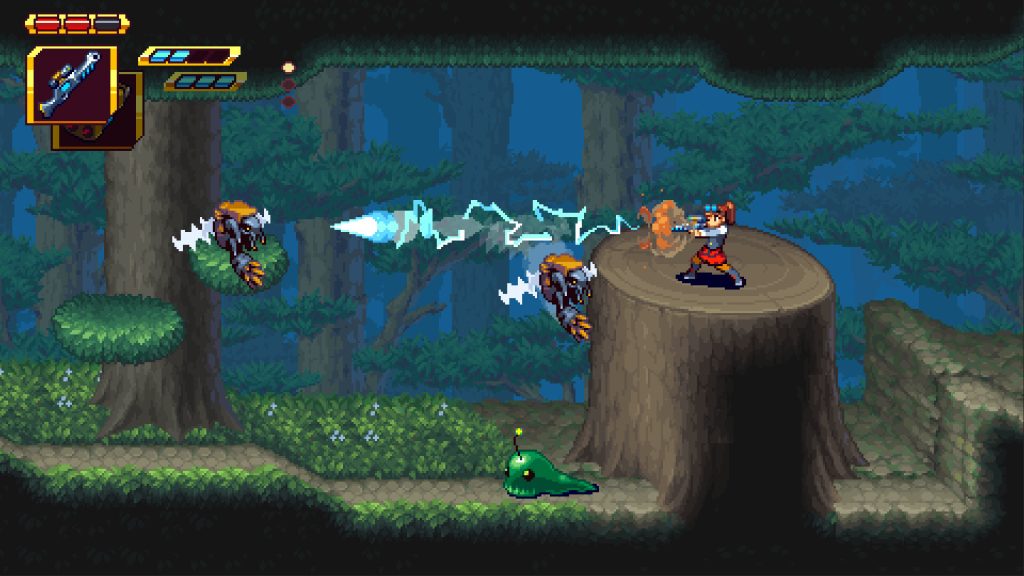
One weapon can become a room-clearing missile launcher that splits into electric shrapnel. Another can transform into a precision sniper rifle that freezes enemies before detonating them. A simple blaster can evolve into a screen-filling storm of bouncing plasma rounds.
The joy comes from experimentation.
Clockwork Ambrosia constantly rewards curiosity. Players are encouraged to combine strange modifiers simply to see what happens. Some builds are hilariously overpowered. Others are total disasters. But even failed experiments feel fun because the system itself is so flexible.
Few Metroidvanias truly embrace player creativity the way this game does.
In many action-platformers, upgrades simply increase numbers. Here, upgrades fundamentally alter behavior. Combat evolves based on your imagination rather than the developer’s intended progression path.
That design philosophy gives the game enormous replay value. Two players can experience completely different combat styles depending on how they build their arsenal.
It also makes progression incredibly satisfying. Every new modification feels meaningful because it expands possibility instead of just improving stats.
There is a downside, though.
The game occasionally struggles to balance its own freedom. Certain weapon combinations become dramatically more effective than others, which can make experimentation feel less rewarding once players discover particularly dominant builds. Some critics have already pointed this out, arguing that a handful of weapon setups overshadow the rest of the customization system.
Still, even imperfect balance cannot diminish how refreshing the system feels.
In a genre crowded with familiar mechanics, Clockwork Ambrosia actually tries something ambitious.
And most of the time, it succeeds.
Movement and Exploration Feel Old-School in the Best and Worst Ways
If the combat system is the game’s greatest strength, exploration is simultaneously one of its best qualities and its biggest source of frustration.
Clockwork Ambrosia embraces classic Metroidvania design with almost stubborn commitment. The map is large, interconnected, and packed with secrets. Hidden pathways snake through nearly every environment. Progression frequently requires returning to older areas with new abilities.
For players who love getting lost in intricate world design, this is paradise.
For players who prefer modern convenience, it may become exhausting.
The game offers very little direct guidance. Objectives are vague. Navigation markers are minimal. Fast travel unlocks later than many players would prefer. Backtracking becomes extensive.
There were multiple moments during my playthrough where I wandered aimlessly for twenty or thirty minutes trying to determine the correct path forward. Sometimes that confusion felt rewarding, like solving a giant mechanical puzzle. Other times it simply felt tedious.
This is where player tolerance becomes important.
Clockwork Ambrosia clearly wants exploration to feel demanding. It wants players to pay attention to environmental details, memorize pathways, and mentally track inaccessible areas for later return. That philosophy feels refreshing in an era where many games aggressively over-explain everything.
But there is a thin line between rewarding exploration and unnecessary inconvenience.
The map system, while functional, could absolutely be improved. Several players have already criticized the inability to zoom out properly or organize markers more effectively.
Still, despite the frustrations, exploration often feels genuinely rewarding because the world is packed with meaningful discoveries. Hidden weapon mods, secret upgrades, lore fragments, and optional encounters constantly tempt players off the critical path.
Unlike some modern games where exploration leads to disappointing rewards, Clockwork Ambrosia usually makes curiosity worthwhile.
And that matters.
Boss Fights Deliver Spectacle and Chaos
The bosses in Clockwork Ambrosia are excellent.
Not flawless, but memorable.
The game leans heavily into mechanical monstrosities and oversized industrial nightmares. Giant walking tanks, corrupted automatons, experimental weapons platforms, and mutated creatures dominate the boss roster.
Most fights prioritize movement and pattern recognition over pure difficulty. Players are expected to combine platforming, dodging, and weapon experimentation to survive increasingly chaotic encounters.
Some bosses genuinely feel overwhelming at first. Projectiles flood the screen. Arena hazards demand constant repositioning. Weak points open for only brief moments. Early fights can feel punishing until players understand the intended rhythm.
Yet the difficulty rarely crosses into unfair territory.
Interestingly, the developers reportedly toned down several boss encounters after feedback from demo players suggested they were excessively brutal.
That was probably the right decision.
The current balance feels challenging without becoming exhausting. Most deaths feel like player mistakes rather than cheap design.
And visually, the bosses are fantastic.
Realmsoft clearly understands how to create spectacle in 2D. Many encounters feel cinematic despite the retro presentation. The screen shakes under massive attacks. Background machinery erupts during later phases. Lighting effects intensify as fights escalate.
It creates a strong sense of scale that many indie platformers struggle to achieve.
The Game’s Biggest Problem: Pacing
Clockwork Ambrosia is at its best once players fully unlock the depth of its systems.
Unfortunately, it takes a while to get there.
The opening hours are noticeably slower than the rest of the game. Weapon customization initially feels limited. Traversal options remain basic for too long. Combat lacks the explosive creativity that later becomes the game’s defining feature.
Several reviewers have criticized this pacing issue already, and it is hard to disagree.
The game eventually becomes incredible at letting players create absurd weapon combinations and fly through environments with confidence. But reaching that point requires patience.
Some players will absolutely bounce off the experience before the systems fully open up.
That is unfortunate because the later hours showcase the game at its absolute best.
Around the midpoint, Clockwork Ambrosia transforms. Exploration becomes smoother. Combat becomes wildly expressive. Movement abilities start chaining together beautifully. Weapon experimentation reaches ridiculous levels.
The game suddenly feels alive.
But the road to that point is undeniably uneven.
A Passion Project You Can Feel in Every Pixel
What ultimately makes Clockwork Ambrosia special is not just its mechanics.
It is the overwhelming sense that this game exists because somebody genuinely needed to make it.
That feeling is impossible to fake.
After fourteen years of development, the project could easily have become creatively diluted. Instead, it feels intensely personal. Every design decision — even the frustrating ones — reflects a clear creative vision.
The game does not chase modern trends.
It does not simplify itself to appeal to everyone.
It trusts players to engage with its systems on their own terms.
That confidence gives Clockwork Ambrosia an identity many larger games lack entirely.
You can see the influences everywhere. Super Metroid. Mega Man X. Contra. Old-school PC action games. Yet the final result never feels like a simple nostalgia project. It feels like a conversation between classic ideas and modern system-driven design.
And honestly, that is rare.
Too many retro-inspired indie games stop at aesthetic imitation. Clockwork Ambrosia actually understands why those older games worked in the first place.
Community Reception So Far
Early player reactions have been surprisingly positive overall, especially among hardcore Metroidvania fans. Many players have praised the weapon customization, visual design, soundtrack, and rewarding exploration.
At the same time, recurring criticisms appear consistently:
- Fast travel unlocks too late
- Navigation can become frustrating
- Some builds feel overpowered
- The map needs improvement
- Early pacing feels sluggish
Those complaints are valid.
But interestingly, even many critical players still seem genuinely impressed by the ambition behind the game. That says a lot about how strong the core experience is.
There is also a certain charm in watching the developers actively respond to community feedback online. Discussions around regional pricing issues, map improvements, and localization support suggest the team is listening closely to players.
That kind of transparency matters for a game this system-heavy.
Performance and Technical State
For an indie game built on a custom engine, Clockwork Ambrosia performs surprisingly well overall.
Animation is smooth. Load times are minimal. Input responsiveness feels excellent during platforming and combat. Particle-heavy encounters occasionally produce minor performance dips on lower-end hardware, but nothing catastrophic.
A few players have reported technical issues involving audio or fullscreen performance on specific setups, though these appear relatively isolated.
More importantly, the game feels polished where it matters most: controls.
Precision platformers live or die based on responsiveness, and Clockwork Ambrosia largely nails the fundamentals. Iris moves with satisfying momentum. Jumps feel reliable. Dodging is sharp and readable.
That strong mechanical foundation carries the game through some of its rougher edges.
Final Verdict
Clockwork Ambrosia is not a perfect game.
Its pacing is uneven. Its navigation systems can become frustrating. Some design choices feel stubbornly old-fashioned in ways that will absolutely alienate certain players.
But none of that stops it from being one of the most fascinating indie releases of 2026.
This is a Metroidvania built around creativity instead of checklist progression. It trusts players to experiment, get lost, and slowly master its systems. Sometimes that approach creates frustration. More often, it creates genuine discovery — something surprisingly rare in modern games.
The weapon customization system alone makes Clockwork Ambrosia worth experiencing. Few games give players this much freedom to shape combat according to personal style. Combined with excellent pixel art, atmospheric world-building, memorable bosses, and rewarding exploration, the result becomes difficult to put down once it fully opens up.
Most importantly, the game has soul.
You can feel the years of obsession behind it. You can feel the influence of classic action-platformers without the experience becoming trapped in nostalgia. You can feel a small team trying to make something ambitious instead of merely safe.
And even when Clockwork Ambrosia stumbles, that ambition makes it compelling.
For hardcore Metroidvania fans, this is an easy recommendation.
For newcomers to the genre, it may be a more challenging entry point.
Either way, Clockwork Ambrosia deserves attention — not because it reinvents the genre completely, but because it reminds players why the genre became beloved in the first place.
Score: 8.5/10 — A beautiful, demanding, deeply creative Metroidvania that rewards patience with one of the most satisfying combat systems the genre has seen in years.
