
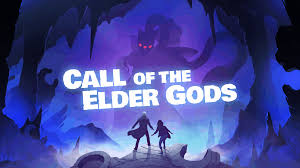
Call of the Elder Gods — A Beautiful Descent Into Cosmic Madness
There’s a particular kind of magic that only certain puzzle-adventure games manage to capture. It’s not the thrill of combat or the rush of competition. It’s curiosity. The feeling of stepping into an unknown place, hearing distant whispers in forgotten ruins, opening a dusty journal, and realizing the answers around you are stranger than the questions you started with.
Call of the Elder Gods understands that feeling better than most games released this year.
Released on May 12, 2026,by Out of the Blue Games and published by Kwalee, the game is a direct sequel to Call of the Sea, the 2020 cult-favorite narrative puzzle adventure. But unlike many sequels that simply try to “go bigger,” Call of the Elder Gods chooses a more difficult path: it goes deeper.
Deeper into mystery. Deeper into psychological horror. Deeper into themes of grief, obsession, memory, and human insignificance against forces beyond comprehension.
And for the most part, it succeeds brilliantly.
This is not a horror game in the traditional sense. There are no cheap jump scares every ten minutes, no shotguns blasting through grotesque monsters, and no endless chase sequences designed purely to spike your heart rate. Instead, the horror here is existential. It creeps under your skin slowly. The game wants you to think. It wants you to observe. It wants you to question reality alongside its characters.
That deliberate pacing will absolutely divide players. Some people will find it hypnotic. Others may find it too slow or too puzzle-heavy. But for players willing to surrender themselves to its rhythm, Call of the Elder Gods becomes one of the most memorable narrative puzzle games in recent years.
A Story Built on Mystery Rather Than Shock
The story follows Professor Harry Everhart and student Evangeline Drayton, two individuals connected by terrifying visions and a mysterious artifact tied to ancient cosmic entities. The game draws heavy inspiration from the works of H. P. Lovecraft, particularly The Shadow Out of Time, but it never feels like a lazy imitation of Lovecraftian fiction.
Instead of relying on tentacles and madness clichés, the narrative focuses on emotional vulnerability.
Harry is exhausted, haunted by the past and struggling with experiences he cannot explain rationally. Evangeline, meanwhile, is driven by curiosity but slowly begins unraveling as the truth becomes more disturbing. Their relationship develops naturally throughout the game, and the dual-character approach adds far more depth than the original Call of the Sea ever achieved.
One of the smartest decisions the writers made was grounding the cosmic horror in personal pain. The game constantly reminds you that behind every supernatural mystery is someone grieving, searching, or desperately trying to make sense of loss.
That emotional core keeps the story engaging even during slower moments.
The narrative unfolds across multiple locations around the world, from eerie libraries and forgotten archaeological sites to frozen wastelands and impossible cities that seem detached from time itself. Every location feels carefully designed to communicate history and atmosphere without excessive exposition.
And atmosphere is where the game truly shines.
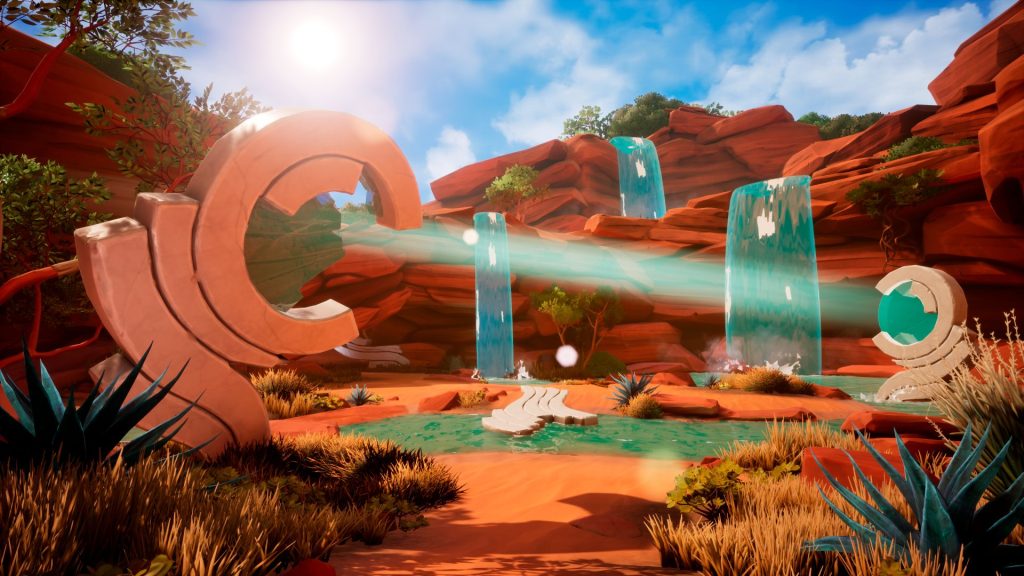
Few modern games understand environmental storytelling this well. Every room feels lived in. Every strange symbol seems purposeful. Every document, photograph, and recording adds another layer to the mystery.
The game trusts players to connect the dots themselves, which is refreshing in an era where many titles over-explain everything.
That said, the pacing occasionally stumbles near the final act. The mystery remains compelling, but some revelations don’t land with the emotional weight they deserve. A few late-game twists feel more intellectually interesting than emotionally satisfying.
Still, even when the story falters slightly, the world itself remains fascinating enough to keep pushing forward.
The Puzzle Design Is Outstanding
Let’s be honest: in puzzle-adventure games, the puzzles either make the experience unforgettable or completely ruin it.
Thankfully, Call of the Elder Gods delivers some of the best puzzle design seen in the genre in years.
The puzzles are observational rather than mechanical. The game rarely hands you obvious solutions. Instead, it expects you to study environments carefully, interpret clues, understand symbolism, and think logically.
This design philosophy gives the game a deeply rewarding sense of discovery.
You’re not just solving arbitrary video game puzzles for the sake of progression. You genuinely feel like an investigator piecing together forbidden knowledge.
One puzzle might require understanding an ancient language hidden within murals. Another could involve manipulating time-based mechanisms across separate realities. Some challenges demand coordination between Harry and Evangeline in clever ways that constantly keep gameplay fresh.
Importantly, the puzzles escalate naturally in complexity.
The early sections ease players into the game’s logic, but later chapters become genuinely challenging. Some moments had me staring at a notebook full of scribbled clues like I was trying to solve a real-world mystery.
And I loved that.
Modern games often fear making players feel stuck. Call of the Elder Gods embraces it.
The game does offer adjustable hint systems, optional journal guidance, and accessibility settings for players who prefer a smoother experience. But if you disable most assistance, the game becomes an incredibly satisfying intellectual challenge.
There were moments where solving a puzzle felt more rewarding than defeating a difficult boss fight in an action game.
That’s rare.
Of course, not every puzzle is perfect. A handful drift dangerously close to obscurity, where the solution feels slightly more confusing than clever. Occasionally, the game’s logic can become overly abstract, especially during the more surreal later chapters.
Still, the overall consistency is impressive. Even weaker puzzles remain interesting because they’re tied so closely to the game’s themes and environments.
Unlike many puzzle games where mechanics feel disconnected from the story, everything here feels narratively motivated.
That cohesion matters.
A Stunning Atmosphere Carried by Art Direction and Sound
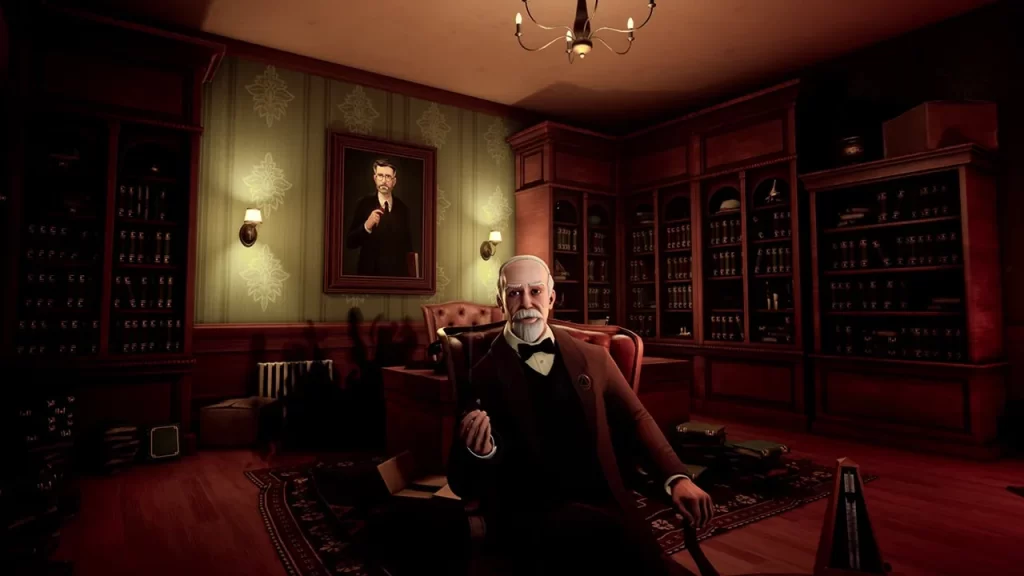
Visually, Call of the Elder Gods is gorgeous.
Not because it pushes photorealistic graphics beyond industry standards, but because it understands artistic identity.
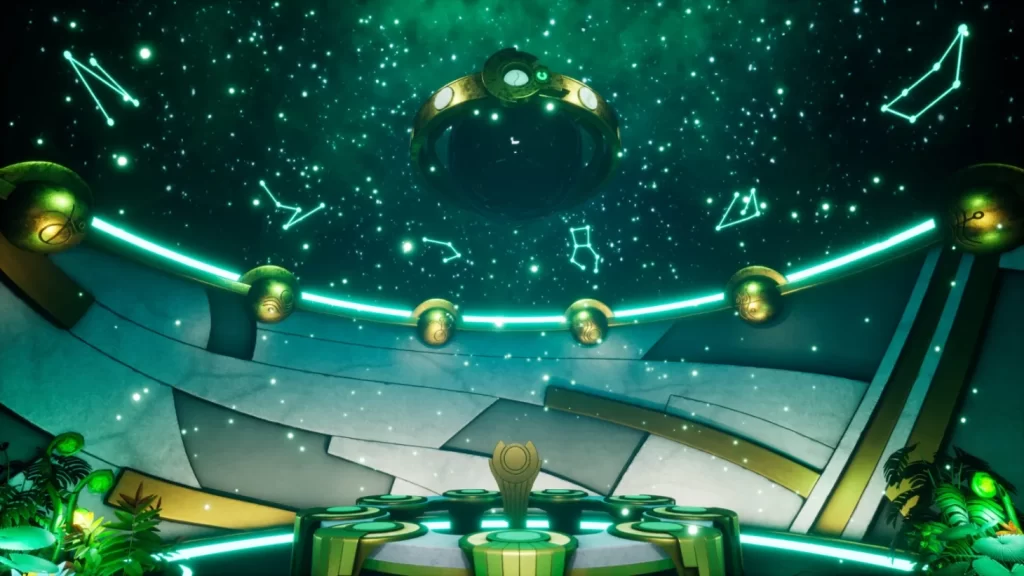
The game uses color, lighting, architecture, and scale exceptionally well. Some environments feel dreamlike and beautiful. Others feel deeply wrong in ways that are difficult to explain.
A towering city beyond reality. Endless frozen landscapes beneath impossible stars. Ancient ruins glowing with symbols humanity was never meant to understand.
The game constantly balances beauty and dread.
And honestly, some scenes are unforgettable.
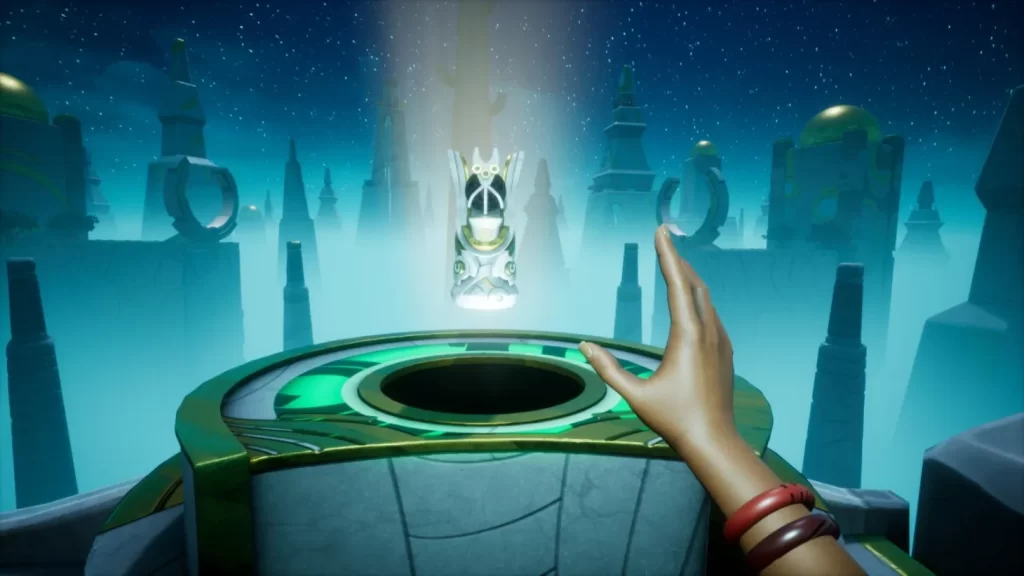
The environmental art frequently does more storytelling than the dialogue itself. You can feel the history of these locations. You can sense civilizations that existed long before humanity. The world feels ancient in a way many Lovecraft-inspired games fail to capture.
The soundtrack deserves equal praise.
Composer Eduardo De La Iglesia delivers music that perfectly supports the game’s tone without overwhelming it. Quiet piano themes slowly evolve into haunting orchestral arrangements as the mystery deepens. Certain tracks create a sense of melancholy so strong that even simple exploration becomes emotionally charged.
The sound design is equally effective.
Subtle whispers. Distant echoes. Strange mechanical groans hidden beneath silence. The game rarely uses loud horror tactics because it doesn’t need them.
It creates unease through implication.
Voice acting is another major strength. Harry and Evangeline both feel believable, grounded, and emotionally human despite the increasingly surreal events around them. The performances carry much of the game’s emotional weight.
The narration from Norah Everhart — returning from Call of the Sea — also adds continuity for longtime fans without alienating newcomers.
Because yes, newcomers can absolutely play this game without finishing the original.
Knowing Call of the Sea adds emotional context, but Call of the Elder Gods functions well as a standalone experience.
The Game’s Biggest Weakness Is Its Momentum
For all its strengths, Call of the Elder Gods occasionally struggles with pacing.
The game moves slowly. Intentionally slowly.
If you enjoy atmospheric exploration games like Myst, The Talos Principle, or Return of the Obra Dinn, you’ll probably appreciate that deliberate pace. But players expecting constant excitement may grow impatient.
Character movement sometimes feels too sluggish, especially during sections requiring repeated backtracking.
And while the story remains intriguing throughout, the final hours become slightly overloaded with exposition and cosmic revelations. There’s a point where the game risks becoming more fascinated with its mythology than its characters.
That imbalance hurts the ending slightly.
The emotional themes remain present, but they become overshadowed by abstract cosmic concepts that don’t always resonate as strongly as the earlier personal drama.
Additionally, some players may find the lack of gameplay variety limiting. Outside of exploration, puzzle-solving, and narrative progression, there isn’t much mechanical diversity.
No combat.
No action set pieces.
Minimal traditional “gameplay systems.”
Whether that’s a flaw or a strength depends entirely on what you want from the experience.
Personally, I appreciated the restraint. The game knows exactly what it wants to be and refuses to compromise its identity chasing mainstream trends.
That confidence deserves respect.
A Lovecraft Game That Actually Understands Lovecraft
Many Lovecraft-inspired games misunderstand what makes cosmic horror effective.
They focus too heavily on monsters and madness while ignoring the existential terror at the heart of Lovecraft’s work: the realization that humanity is insignificant.
Call of the Elder Gods understands this perfectly.
The fear here doesn’t come from creatures jumping out at you. It comes from knowledge. From realizing the universe operates according to truths humanity cannot fully comprehend.
The game constantly creates the sensation that the protagonists are uncovering things they were never meant to see.
And unlike many Lovecraftian stories that become emotionally cold, this game maintains genuine humanity throughout. Harry and Evangeline remain relatable because their motivations are deeply personal.
They aren’t investigating cosmic mysteries for adventure.
They’re searching for meaning.
That distinction gives the narrative emotional grounding even when events become increasingly surreal.
The game also avoids overusing horror imagery. Some of the most unsettling moments involve architecture, dreams, impossible geometry, or subtle distortions in reality rather than explicit monsters.
It’s psychological horror built through atmosphere rather than spectacle.
That approach won’t satisfy players wanting constant terror, but it creates something far more memorable.
Community Reception Has Been Strong — With Some Caveats
Since release, community and critic reception has been largely positive. Many players have praised the puzzle design, atmosphere, and world-building, while criticism mostly centers on pacing and the ending.
The game currently holds “Very Positive” user reviews on Steam, which is impressive for a slow-paced narrative puzzle title in today’s market.
Interestingly, many players who enjoyed Call of the Sea feel this sequel improves the formula significantly, particularly regarding puzzle complexity and environmental variety.
Others have noted that the game feels more ambitious but slightly less cohesive than its predecessor. That criticism is fair.
The original Call of the Sea benefited from simplicity. Call of the Elder Gods aims for something grander and occasionally loses focus under the weight of its ambition.
But honestly, I’d rather play an ambitious game that occasionally stumbles than a safe game that never risks anything.
Final Verdict
Call of the Elder Gods is not designed for everyone.
It demands patience.
It demands observation.
It demands thought.
But if you meet the game on its own terms, it rewards you with one of the most atmospheric and intellectually satisfying adventures released this year.
Its puzzles are exceptional.
Its environments are mesmerizing.
Its sound design is haunting.
And its story, while imperfect, carries genuine emotional weight beneath the cosmic horror.
This is the kind of game that lingers in your mind after the credits roll. Not because of shocking twists or explosive action, but because of the feelings it creates — curiosity, unease, wonder, sadness, fascination.
Very few games achieve that balance successfully.
Even fewer do it while staying true to their artistic identity.
In a gaming landscape increasingly obsessed with endless live-service mechanics and cinematic excess, Call of the Elder Gods feels refreshingly confident in being a slow, intelligent, atmospheric mystery.
It won’t be the biggest game of 2026.
But it may quietly become one of the year’s most memorable.
Score: 8.5/10 — A haunting, beautifully crafted puzzle adventure that occasionally loses momentum but delivers an unforgettable descent into cosmic mystery.
