
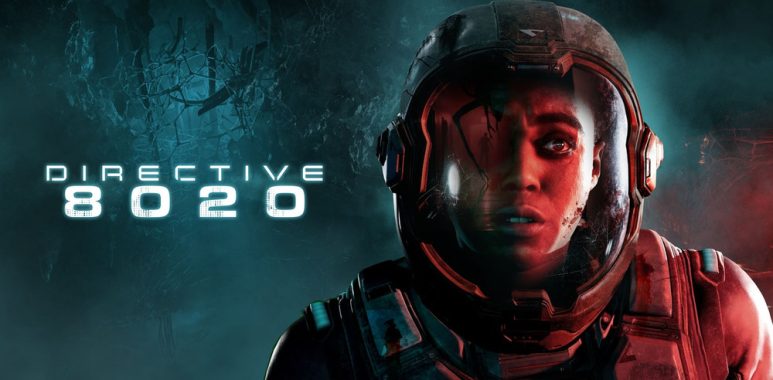
Directive 8020 – A Terrifying Leap Forward for Interactive Horror
When Supermassive Games first launched The Dark Pictures Anthology, the studio promised a series of cinematic horror experiences that would blend player choice, branching narratives, and movie-like tension. Some entries landed better than others, but with Directive 8020, released on May 12, 2026, the studio may have finally delivered its most ambitious and polished horror game yet.
Set aboard a deep-space colony ship headed toward Tau Ceti f, Directive 8020 abandons haunted towns and cursed folklore in favor of cold steel corridors, isolation, paranoia, and cosmic terror. The result is a game that feels like a collision between Alien, The Thing, and classic psychological horror, but filtered through Supermassive’s signature choice-driven storytelling.
What makes Directive 8020 stand out is not just its setting, but its confidence. Unlike earlier anthology titles that sometimes felt restricted by budget limitations or uneven writing, this game feels fully realized. From its stunning environmental design to its nerve-racking stealth systems, Directive 8020 represents a major evolution for the franchise.
The game doesn’t reinvent interactive horror entirely, but it refines nearly every system the studio has experimented with over the past decade. For longtime fans of cinematic horror games, this is likely the experience they’ve been waiting for.
A Story Built on Fear and Distrust
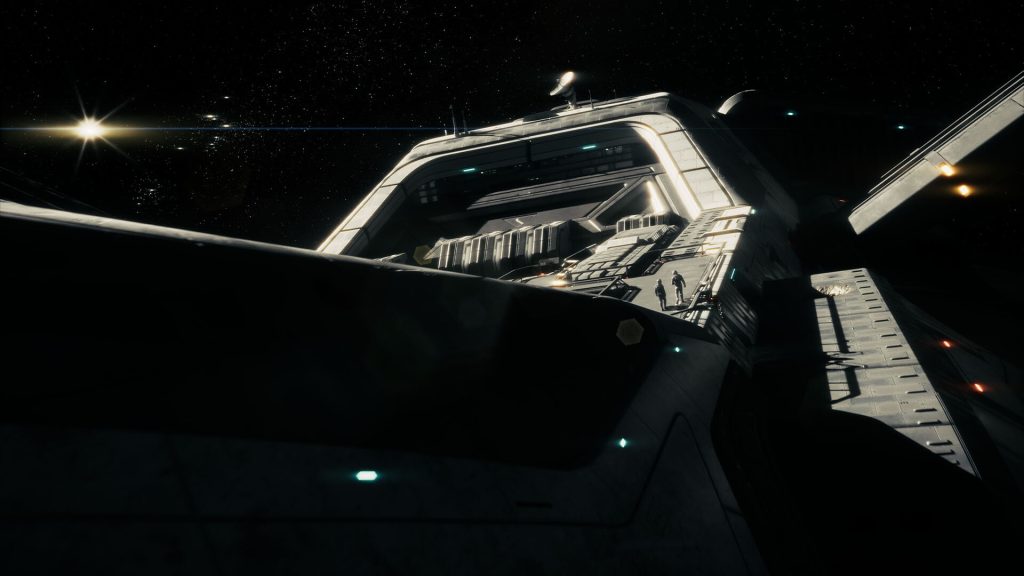
The premise is deceptively simple. Earth is dying, resources are depleted, and humanity’s last hope lies in the distant planet Tau Ceti f. Aboard the colony ship Cassiopeia, a carefully selected crew travels through deep space with the mission of ensuring humanity’s survival. But as expected in a horror game, something goes catastrophically wrong.
Early in the journey, the crew encounters an alien organism capable of perfectly imitating human beings. That single narrative concept becomes the foundation for nearly every moment of tension in the game.
Who is real?
Who has been replaced?
Can anyone be trusted?
The brilliance of Directive 8020 lies in how it weaponizes uncertainty. Unlike traditional monster horror games where danger is obvious, this game thrives on suspicion. Conversations suddenly carry hidden meaning. Friendly faces become unsettling. Small dialogue choices feel dangerous because you never know whether you are helping a human survivor or an alien mimic.
The writing is significantly stronger than several previous anthology entries. Characters feel layered and believable, each carrying emotional baggage, personal ambitions, and secrets that slowly unravel over time. Some crew members are instantly likable, while others appear suspicious from the start, but the game cleverly manipulates your assumptions throughout the story.
One of the game’s strongest achievements is pacing. The opening hour is relatively slow, focused on world-building and interpersonal dynamics. But once the horror begins, the narrative escalates with remarkable intensity. By the midpoint, paranoia consumes nearly every interaction, and the game becomes emotionally exhausting in the best possible way.
The branching storyline is also genuinely impressive. Supermassive has always marketed player choice heavily, but Directive 8020 finally delivers consequences that feel substantial. Characters can survive or die in wildly different ways depending on player decisions, and certain story paths reveal entirely different truths about the alien organism.
Unlike some earlier titles where endings felt only slightly altered, the variations here are meaningful enough to encourage replayability.
The Best Atmosphere Supermassive Has Ever Created
If there is one area where Directive 8020 absolutely excels, it is atmosphere.
The Cassiopeia feels terrifyingly believable. Every hallway hums with mechanical tension. Emergency lights flicker against metallic walls. Ventilation shafts echo with distant sounds that may or may not be human. The ship itself becomes a character, constantly reminding players that they are trapped thousands of light-years away from safety.
The environmental art direction is exceptional. Instead of relying on endless jump scares, the game creates dread through silence, lighting, and spatial design. Long corridors feel claustrophobic. Medical labs feel contaminated. Living quarters feel disturbingly intimate once paranoia takes hold.
The visual quality is also a major leap forward for Supermassive Games. Facial animations are more natural, character models are detailed, and cinematic scenes transition smoothly into gameplay. On current-generation hardware, the game looks phenomenal, especially during darker sequences where lighting and reflections create near-photorealistic tension.
What truly elevates the atmosphere, however, is the sound design.
Every creaking pipe, distant metallic impact, or muffled whisper contributes to the growing sense of unease. Wearing headphones while playing Directive 8020 transforms the experience completely. The game understands that horror often works best when players fear what they cannot see.
The soundtrack deserves praise as well. Rather than overwhelming scenes with loud orchestral music, the score remains restrained and unsettling. Ambient tones and subtle synth layers create a persistent sense of isolation. During high-stress moments, the music intensifies just enough to raise anxiety without becoming distracting.
There are several sequences in the game that rank among the most effective horror moments Supermassive has ever created.
One late-game stealth section, involving a darkened maintenance deck and a suspected mimic hidden among surviving crew members, is genuinely nerve-racking. The game expertly balances tension and vulnerability, forcing players to second-guess every action.
Gameplay That Finally Feels Modern
One criticism frequently directed at earlier anthology games was that gameplay sometimes felt too passive. Players often spent long stretches simply walking, watching cutscenes, and completing quick-time events.
Directive 8020 changes that formula considerably.
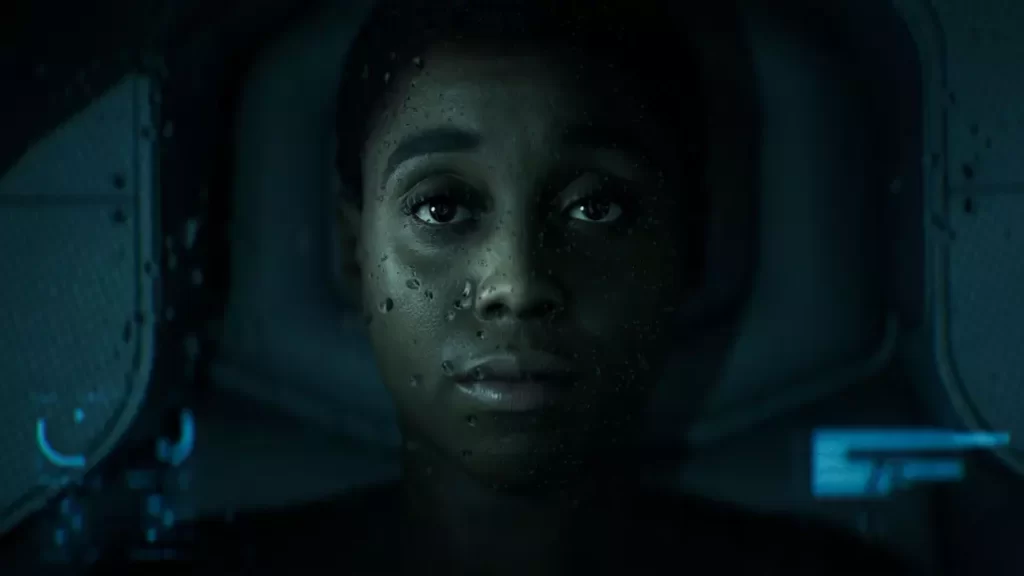
While cinematic storytelling remains central, the game introduces more active gameplay mechanics, including stealth sections, environmental problem-solving, resource management, and expanded exploration.
The stealth mechanics are surprisingly effective. Hiding from alien entities while monitoring noise levels and movement patterns adds genuine gameplay tension rather than scripted suspense. Some encounters feel almost survival-horror inspired, recalling classics like Alien: Isolation.
The decision-making system has also evolved. Choices no longer feel limited to obvious morality options. Many conversations contain subtle emotional implications that influence relationships and trust levels among the crew.
This creates a fascinating social dynamic.
If one character becomes suspicious of another, alliances shift naturally. Some characters may refuse to cooperate later in the story depending on earlier interactions. These systems make the narrative feel reactive in ways previous games only partially achieved.
Exploration has improved as well. Levels are larger, secrets are more rewarding, and environmental storytelling adds depth to the universe. Logs, recordings, and hidden documents flesh out both the mission and the terrifying biology of the alien organism.
That said, the gameplay still carries some limitations.
Movement occasionally feels stiff, particularly during high-pressure moments. Certain animations remain slightly awkward, and some stealth encounters rely on trial-and-error design. There are also moments where the pacing slows due to excessive walking sections.
However, compared to older anthology titles, the improvements are dramatic.
This is the first Dark Pictures game that genuinely feels like a fully developed survival-horror experience rather than an interactive movie with horror elements attached.
Performances That Sell the Horror
A horror game built around paranoia and identity collapse depends heavily on acting performances, and thankfully Directive 8020 delivers some of the strongest performances in Supermassive’s catalog.
The cast handles emotional breakdowns, fear, suspicion, and desperation convincingly. Characters react believably to impossible situations, which helps maintain immersion even during the more outrageous sci-fi moments.
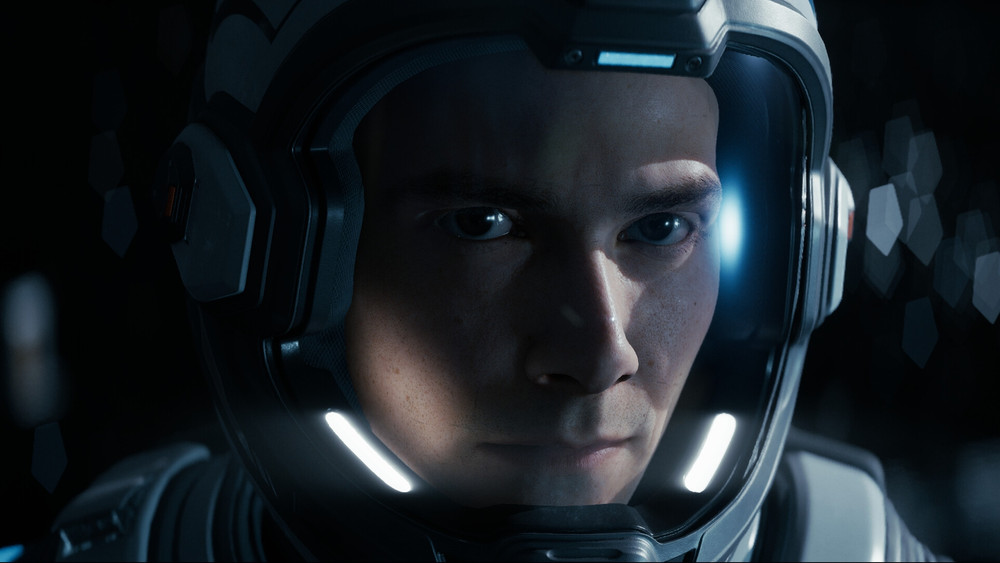
The facial capture technology deserves particular praise. Subtle eye movements, nervous expressions, and emotional reactions make conversations feel more authentic than ever before. Since the story revolves around determining who can be trusted, those tiny visual details become incredibly important.
Several standout performances elevate the narrative significantly. One crew member’s gradual descent into paranoia is especially compelling, while another character’s emotional arc surrounding guilt and survival becomes one of the game’s emotional anchors.
Unlike some previous anthology entries where characters occasionally felt like horror stereotypes, the crew of the Cassiopeia feels human.
That humanity makes the horror work.
When characters die, it matters.
When friendships collapse, it hurts.
When someone reveals themselves as compromised—or potentially compromised—the emotional impact lands hard.
Horror Inspired by the Greats
It is impossible to discuss Directive 8020 without acknowledging its inspirations.
The game clearly draws from classic science-fiction horror films, particularly Alien, The Thing, and even elements of Event Horizon.
But rather than feeling derivative, the game successfully combines those influences into something uniquely interactive.
The alien mimic concept, clearly inspired by The Thing, works exceptionally well in a choice-driven narrative structure. The uncertainty surrounding identity becomes far more engaging when players actively shape relationships and outcomes.
The isolation and industrial sci-fi design echo Alien, while the psychological deterioration among the crew recalls classic cosmic horror themes.
Importantly, Directive 8020 understands why those films remain effective decades later. The horror is not just about monsters—it is about fear, mistrust, helplessness, and the collapse of human connection under pressure.
That thematic depth gives the game surprising emotional weight.
Multiplayer and Replayability
Like previous Dark Pictures games, Directive 8020 supports shared experiences, including couch co-op and movie-night style multiplayer.
This format works brilliantly for the game’s central themes.
Watching friends accuse one another, debate decisions, and panic during tense sequences creates a highly entertaining social experience. Horror games often become memorable because of shared reactions, and Directive 8020 embraces that perfectly.
Replayability is also significantly improved due to the branching narrative complexity. Different choices genuinely reshape scenes, character dynamics, and endings. Some story revelations may never appear during a single playthrough, encouraging experimentation.
There are also numerous hidden paths and optional discoveries that expand the lore surrounding the alien organism and humanity’s desperate colonization efforts.
For completionists, the game offers substantial replay value.
Technical Performance and Presentation
For the most part, Directive 8020 performs well technically.
Load times are fast on modern hardware, frame rates remain relatively stable, and visual fidelity is impressive across platforms.
However, the game is not entirely free of technical flaws.
Occasional animation glitches still appear, particularly during scene transitions. Lip-sync issues surface sporadically, and some environmental textures load inconsistently during faster movement sections.
Thankfully, these issues rarely damage the experience significantly.
More importantly, the game feels polished compared to some earlier Supermassive releases that launched with more noticeable technical instability.
The cinematic presentation is exceptional overall. Camera work, editing, lighting, and sound mixing combine to create moments that feel genuinely film-quality. Certain sequences could easily pass as scenes from a high-budget science-fiction horror movie.
Where the Game Falls Short
As strong as Directive 8020 is, it is not flawless.
The opening section, while necessary for character development, may feel too slow for players expecting immediate horror. Some dialogue sequences occasionally drag, and a few supporting characters receive less development than they deserve.
The gameplay improvements are welcome, but some mechanics still lack refinement. Stealth sections can sometimes feel inconsistent, especially when enemy detection appears unpredictable.
There is also a recurring issue with pacing in the final act. The game escalates dramatically toward its climax, but a few narrative reveals arrive too quickly, reducing the emotional impact of certain twists.
Additionally, players who dislike cinematic, story-heavy games may still find the experience too scripted compared to traditional survival-horror titles.
This remains a narrative-focused game first and foremost.
If someone expects nonstop action or deep combat systems, they may be disappointed.
But for players invested in horror storytelling, these weaknesses are relatively minor compared to the game’s strengths.
Final Verdict
Directive 8020 is easily one of the strongest entries in The Dark Pictures Anthology and arguably the best horror game Supermassive Games has produced to date.
It successfully combines cinematic storytelling, meaningful player choice, psychological tension, and survival-horror gameplay into an experience that feels ambitious and genuinely terrifying.
More importantly, it understands the emotional core of horror.
The game is not simply about escaping monsters. It is about fear of isolation, fear of betrayal, and fear of losing trust in the people around you.
Its atmosphere is exceptional, its performances are convincing, and its narrative delivers enough suspense and unpredictability to keep players invested from beginning to end.
While some gameplay systems still need refinement, Directive 8020 represents a major step forward for interactive horror games. It feels like the moment Supermassive finally discovered the perfect balance between cinematic storytelling and engaging gameplay mechanics.
For horror fans, science-fiction enthusiasts, and anyone who enjoys narrative-driven experiences, this is an easy recommendation.
It is tense, emotional, visually stunning, and deeply unsettling in all the right ways.
In space, nobody can hear you scream—but in Directive 8020, everyone can hear your paranoia.
